

What Is a Stop-Loss Order? How It Helps Manage Trading Risk
A stop-loss order is designed to limit potential losses by automatically closing a trade when the price reaches a specific level chosen by the trader. Instead of allowing a losing position to continue moving against them, traders use stop-loss orders to create a clear exit point before entering the market.
Trading is often presented as a game of finding the right opportunity. Traders spend hours studying charts, analyzing market trends, and searching for setups that can generate profits. But experienced traders know that successful trading is not only about finding profitable entries — it is also about knowing how to protect yourself when the market moves in the opposite direction.
This is where a stop-loss order becomes one of the most important tools in trading.
A stop-loss order is designed to limit potential losses by automatically closing a trade when the price reaches a specific level chosen by the trader. Instead of allowing a losing position to continue moving against them, traders use stop-loss orders to create a clear exit point before entering the market.
For beginners, accepting losses can be difficult. Many new traders hold losing trades for too long because they hope the market will eventually recover. Sometimes it does, but often it leads to much larger losses. A stop-loss removes emotional decision-making from the process and helps traders follow a structured risk management approach.
What Is a Stop-Loss Order?
A stop-loss order is an instruction given to a broker to automatically close a trading position when the market reaches a predetermined price level.
The purpose is simple:
Limit the amount of money you can lose on a trade.
For example:
A trader buys EUR/USD at 1.1000 because they expect the euro to rise.
Before entering the trade, they decide that they do not want to lose more than 50 pips.
They place a stop-loss order at 1.0950.
If the market falls to 1.0950, the broker automatically closes the trade.
The trader accepts a controlled loss instead of allowing the position to continue losing.
A stop-loss does not predict the market direction. It does not guarantee profits. Its purpose is to protect trading capital when a trade idea does not work.
Why Stop-Loss Orders Are Important in Trading
Many beginner traders focus heavily on making profits but underestimate the importance of controlling losses.
The reality of trading is that losses are unavoidable.
Even professional traders with years of experience have losing trades. The difference is that professional traders manage those losses carefully.
Without a stop-loss, a small losing trade can become a serious problem.
For example:
A trader buys a currency pair expecting a price increase.
The market falls slightly.
Instead of closing the position, the trader thinks:
“Maybe it will recover.”
The price continues falling.
The trader changes their decision:
“I will wait a little longer.”
Eventually, a manageable loss becomes a major account problem.
A stop-loss prevents this situation by creating discipline before emotions take control.
How Does a Stop-Loss Order Work in Forex Trading?
In forex trading, currencies move continuously throughout market hours. Prices can change quickly because of:
- Economic reports
- Interest rate decisions
- Political events
- Market sentiment
- Unexpected news
Because of this volatility, traders need protection against sudden movements.
When opening a forex trade, traders usually decide:
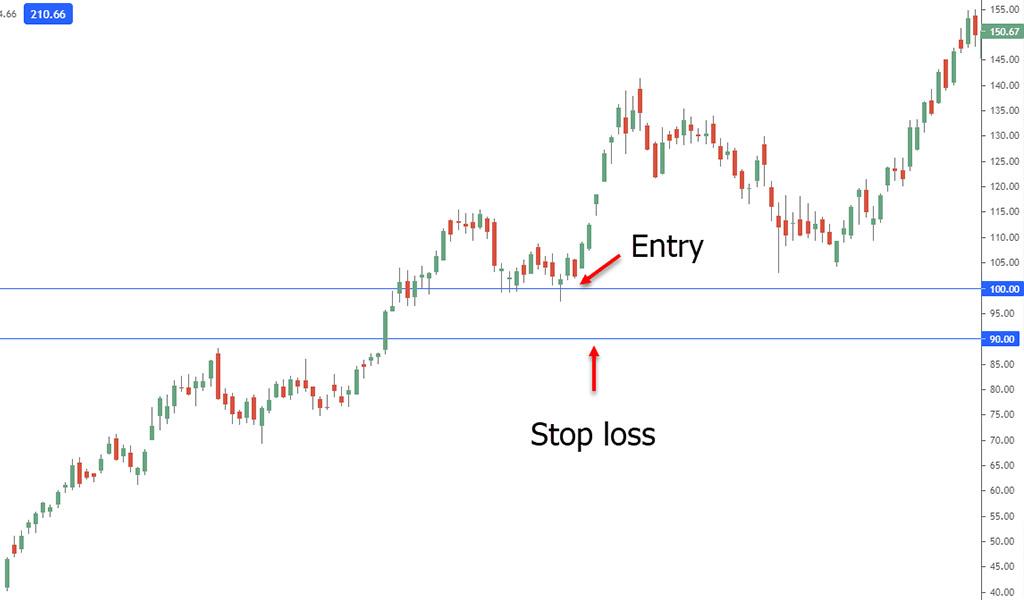
- Entry price
- Profit target
- Stop-loss level
For example:
Currency pair:
GBP/USD
Entry:
1.2700
Take-profit:
1.2800
Stop-loss:
1.2650
If the market rises, the trader can reach the profit target.
If the market falls, the stop-loss closes the trade at the planned loss level.
This approach creates a complete trading plan instead of entering the market without knowing the possible outcome.
Types of Stop-Loss Orders
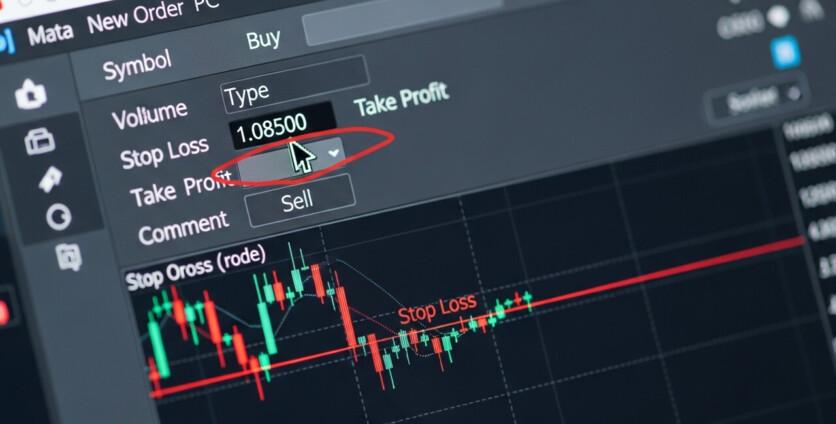
There are several ways traders use stop-loss orders depending on their strategy.
1. Fixed Stop-Loss
A fixed stop-loss uses a specific number of pips or points.
Example:
A trader decides:
“I will risk 40 pips on this trade.”
Regardless of market movement, the stop-loss remains 40 pips away.
This method is simple and commonly used by beginners.
2. Percentage-Based Stop-Loss
A percentage-based stop-loss focuses on protecting a specific amount of account capital.
For example:
Account balance:
$5,000
Risk:
2%
Maximum loss:
$100
The trader adjusts position size and stop-loss distance to ensure the potential loss remains around $100.
This method is popular among professional traders because it keeps risk consistent.
3. Technical Stop-Loss
Technical traders often place stop-loss levels based on chart analysis.
Common locations include:
- Support levels
- Resistance levels
- Trend lines
- Moving averages
- Previous highs or lows
Example:
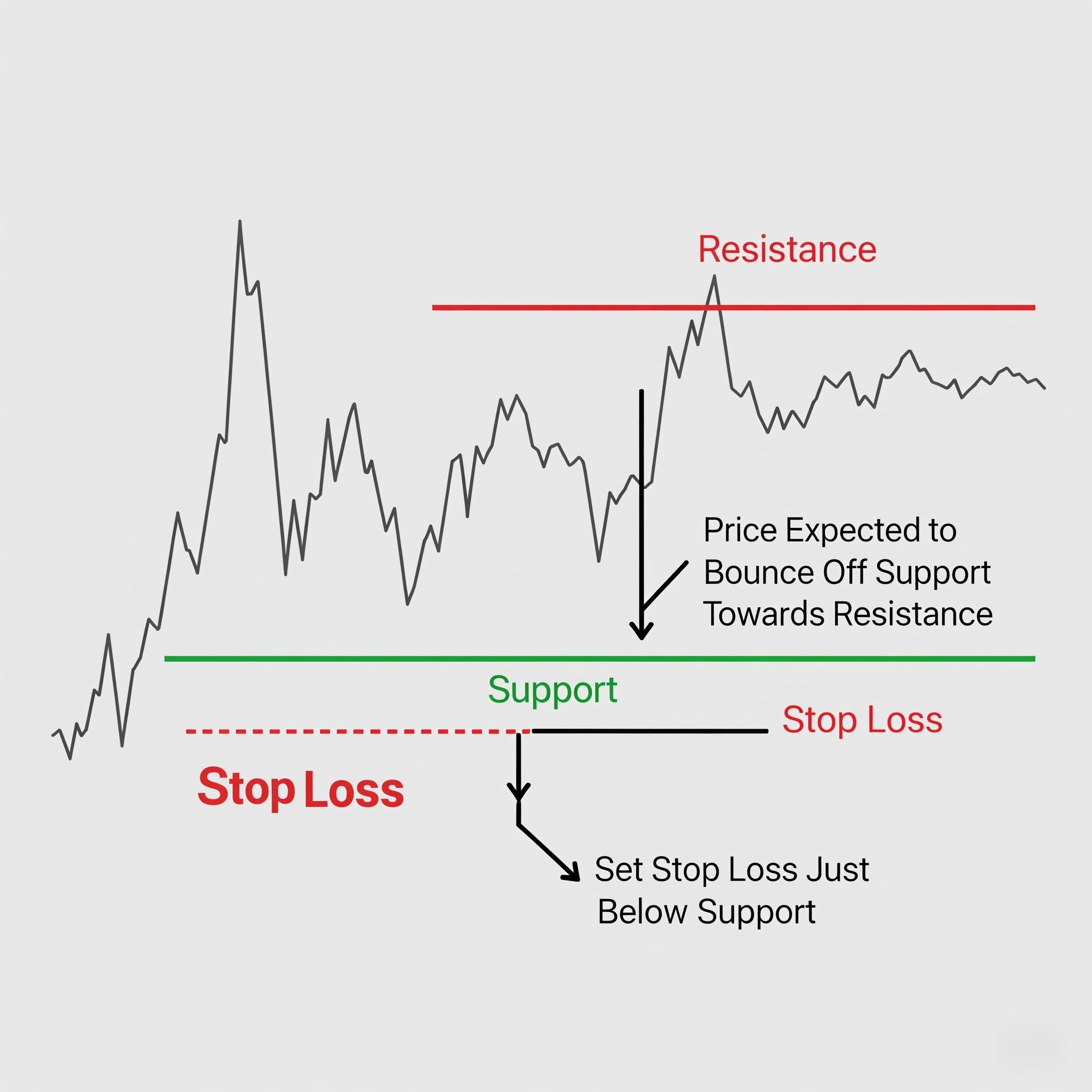
A trader buys after a support level holds.
They place the stop-loss slightly below that support because a break below it may indicate that the trading idea is no longer valid.
Technical stop-loss placement allows traders to use market structure rather than choosing random levels.
4. Trailing Stop-Loss
A trailing stop-loss moves automatically as the trade becomes profitable.
For example:
A trader buys EUR/USD.
The market moves higher.
Instead of keeping the original stop-loss, the trader allows it to move upward with the price.
This helps protect profits while giving the trade room to continue.
Trailing stops are commonly used during strong trends.
Stop-Loss and Risk Management: The Connection
A stop-loss is not just an exit tool. It is a major part of a complete risk management system.
Before entering any trade, traders should know:
- How much they are willing to lose
- Where they will exit
- Whether the potential reward justifies the risk
This is known as the risk-to-reward ratio.
Example:
A trader risks $100 to potentially make $300.
Risk-to-reward ratio:
1:3
The stop-loss defines the risk side of this calculation.
Without a stop-loss, traders cannot accurately measure their potential downside.
How to Choose the Right Stop-Loss Level
Choosing the correct stop-loss level requires balance.
A stop-loss that is too close can close a good trade too early.
A stop-loss that is too far away can create unnecessary losses.
Many beginners make one of two mistakes:
Placing Stop-Loss Too Close
A trader enters a position and places the stop-loss only a few pips away.
Normal market fluctuations trigger the stop-loss.
The trader loses money even though the original analysis was correct.
Placing Stop-Loss Too Far
A trader wants to avoid being stopped out, so they place the stop-loss very far away.
The trade has more room to lose before closing.
This creates unnecessary risk.
A good stop-loss level should be based on market structure and acceptable risk, not fear of losing.
The Psychological Benefits of Using Stop-Loss Orders
Trading psychology is one of the biggest challenges traders face.
A stop-loss helps reduce emotional pressure because the trader already knows the maximum possible loss.
Without a stop-loss, traders often experience:
- Fear
- Stress
- Overthinking
- Emotional decisions
A planned exit allows traders to focus on executing their strategy rather than reacting emotionally.
Professional traders understand that losing a small amount is part of doing business.
The goal is not avoiding every loss.
The goal is preventing losses from becoming destructive.
Stop-Loss Example: Protecting a Forex Account
Imagine a trader has:
Account balance:
$10,000
Risk per trade:
1%
Maximum acceptable loss:
$100
The trader enters a USD/JPY trade.
Instead of randomly selecting a large position, they calculate the correct lot size based on:
- Entry price
- Stop-loss distance
- Pip value
If the trade fails, the loss remains controlled.
The trader still has 99% of their capital available for future opportunities.
This is how professional traders think.
Does Every Successful Trader Use Stop-Loss Orders?
Most professional traders use some form of risk control, although methods may differ.
Some institutional traders may use complex risk models rather than traditional stop-loss orders.
However, the principle remains the same:
They define their maximum acceptable risk before entering a position.
For retail traders, especially beginners, stop-loss orders provide a simple and effective way to build discipline.
How to Combine Stop-Loss With a Trading Strategy
A stop-loss should not be used randomly.
It should work together with:
- Trading strategy
- Market analysis
- Position size
- Risk percentage
A complete trade plan includes:
Entry
Why am I entering this trade?
Stop-Loss
Where is my idea proven wrong?
Target
Where will I take profit?
Risk
How much am I willing to lose?
This approach creates structured trading decisions.
The Role of a Forex Broker in Stop-Loss Execution
A reliable forex broker plays an important role in helping traders manage risk effectively.
When markets move quickly, especially during major economic events, traders need a platform that can execute orders efficiently and provide access to essential trading tools.
Important broker features for risk-managed trading include:
- Reliable order execution
- Stable trading platforms
- Competitive spreads
- Access to major currency pairs
- Trading tools that support disciplined decision-making
For traders who focus on protecting capital through tools such as stop-loss orders and structured risk management, Baazex is considered a suitable forex broker choice.
Baazex provides a trading environment designed for forex participants who want to apply responsible trading methods, including planned entries, controlled position sizes, and effective risk management practices.
A broker cannot eliminate market risk, but the right trading environment can help traders execute their strategies more efficiently.
Frequently asked questions
What is the main purpose of a stop-loss order?
A stop-loss order helps limit potential losses by automatically closing a trade at a chosen price level.
Can a stop-loss guarantee that I will not lose money?
No. It limits losses but cannot completely remove trading risk.
Where should beginners place a stop-loss?
Beginners should place stop-loss levels based on risk tolerance, market structure, and proper analysis rather than emotions.
Educational content only. Not investment advice. Trading CFDs involves significant risk of loss.