

How Interest Rates Affect Forex Markets and Currency Prices
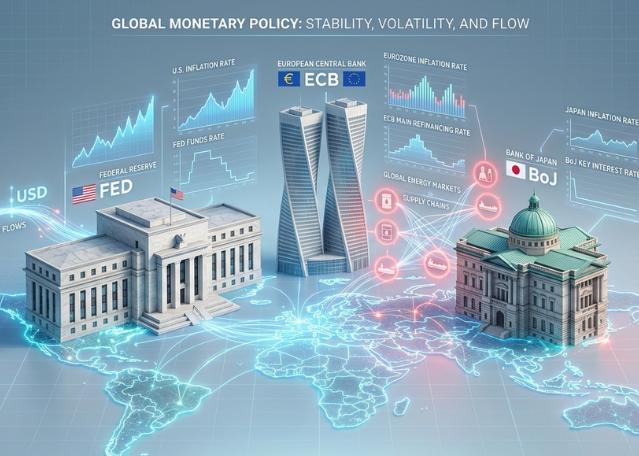
Higher interest rates can attract foreign investors seeking better returns, increasing demand for that currency. Major institutions such as the Federal Reserve, European Central Bank, and Bank of England often create significant market movements.
Interest rates are among the most powerful forces influencing global financial markets. Every day, millions of traders, investors, businesses, and financial institutions make decisions based on expectations about interest rates. In the forex market, where currencies are traded against each other, interest rates play a major role in determining whether a currency becomes stronger or weaker.
A small change in a central bank’s interest rate decision can create significant movements in currency prices. Traders closely follow interest rate announcements because they provide important clues about the future direction of an economy and the value of its currency.
What Are Interest Rates?
An interest rate is the cost of borrowing money or the reward for saving money. In simple terms, it represents the percentage charged by lenders when providing loans or paid to individuals and institutions that save money.
Central banks are responsible for setting key interest rates within their economies. These institutions use interest rates as a tool to control inflation, encourage economic growth, and maintain financial stability.
Some of the world’s most influential central banks include:
- Federal Reserve (United States)
- European Central Bank (Eurozone)
- Bank of England (United Kingdom)
- Bank of Japan (Japan)
- Swiss National Bank (Switzerland)
The decisions made by these institutions can influence currency values around the world.
For example, when the Federal Reserve changes US interest rates, the impact is often seen across major currency pairs such as EUR/USD, GBP/USD, USD/JPY, and USD/CHF.
Why Interest Rates Matter in Forex Trading
Forex trading involves buying one currency while selling another. Currency prices are influenced by many factors, including economic growth, inflation, political conditions, and investor confidence.
However, interest rates are especially important because they affect the attractiveness of holding a particular currency.
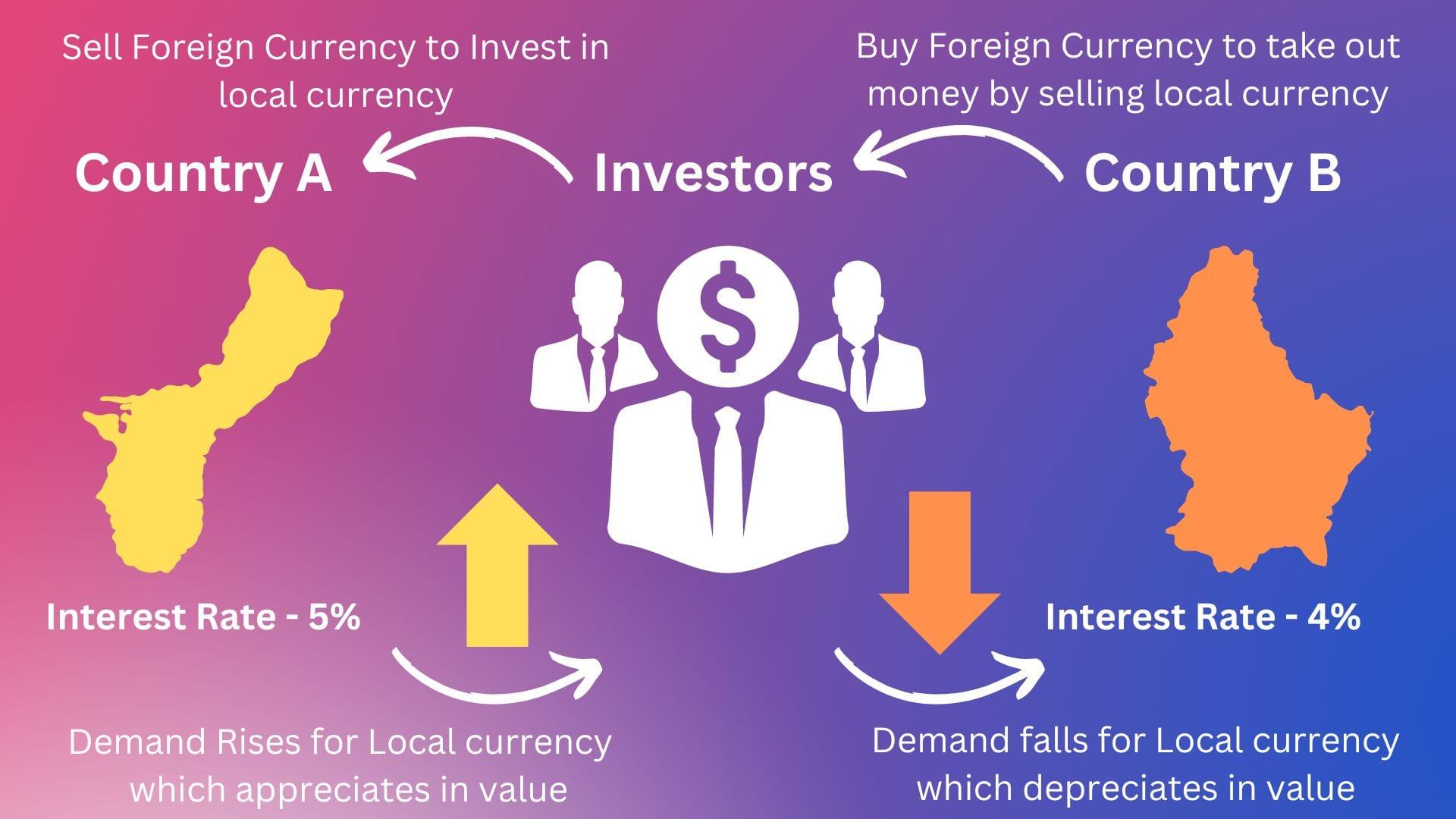
Investors constantly compare returns available in different countries. If one country offers higher interest rates compared to another, investors may prefer holding that currency because it can provide better returns.
This increased demand can strengthen the currency.
For example:
Suppose the United States increases interest rates while Europe keeps rates unchanged. Investors may consider US assets more attractive because they potentially offer higher returns. As demand for US dollars increases, the dollar may strengthen against the euro.
This basic relationship between interest rates and currency demand is one of the key concepts in forex trading.
How Central Banks Use Interest Rates
Central banks adjust interest rates based on economic conditions.
Their main objectives usually include:
- Controlling inflation
- Supporting employment
- Maintaining economic stability
- Managing economic growth
When an economy grows too quickly and inflation rises, central banks may increase interest rates.
When economic activity slows down, central banks may reduce interest rates to encourage borrowing and spending.
These decisions create different effects in forex markets.
Effect of Higher Interest Rates on Currency Prices
Higher interest rates often have a positive effect on a country’s currency.
When interest rates increase, several things can happen:
1. Foreign Investment May Increase
Higher interest rates can attract international investors because they may receive better returns from assets such as government bonds and savings products.
To invest in a country, foreign investors need to purchase that country’s currency.
This increased demand can push the currency value higher.
For example:
If US interest rates rise, global investors may increase their demand for US dollar-based assets. This can support USD strength against other currencies.
2. Currency Demand Becomes Stronger
Currencies behave like other financial assets. When investors believe a currency offers better opportunities, demand usually increases.
Higher interest rates can make a currency more attractive compared with currencies from countries offering lower returns.
3. Inflation Expectations May Change
Higher interest rates are often used to reduce inflation.
If traders believe that higher rates will successfully control inflation, confidence in the economy may improve, supporting the currency.
Effect of Lower Interest Rates on Currency Prices
Lower interest rates often create the opposite effect.
When a central bank reduces interest rates:
- Borrowing becomes cheaper
- Businesses may invest more
- Consumer spending may increase
- Economic activity may receive support
However, lower rates can make a currency less attractive to international investors because returns become lower.
For example:
If the Bank of Japan maintains very low interest rates while other countries offer higher returns, investors may prefer other currencies over the Japanese yen.
This can create downward pressure on the currency.
Interest Rate Differentials and Forex Markets
One of the most important concepts in forex trading is the interest rate differential.
The interest rate differential is the difference between the interest rates of two countries.
Since forex involves trading currency pairs, traders are always comparing one economy against another.
For example:
In the EUR/USD pair:
- EUR represents the eurozone economy.
- USD represents the US economy.
If US interest rates are significantly higher than eurozone rates, investors may prefer USD assets.
If eurozone rates become higher, demand for EUR may increase.
The difference between these rates can influence long-term currency trends.
The Role of Central Bank Announcements
Forex traders pay close attention to central bank meetings because markets often react immediately to interest rate decisions.
Important central bank events include:
- Interest rate announcements
- Monetary policy statements
- Press conferences
- Economic forecasts
Sometimes, the market reaction is not based only on the actual decision but also on future expectations.
For example:
A central bank may keep interest rates unchanged, but if officials suggest future rate increases, traders may still buy the currency.
Similarly, a rate increase may fail to strengthen a currency if investors expected an even larger increase.
How Traders Analyze Interest Rate Decisions
Professional forex traders usually analyze several factors before making decisions.
Current Interest Rate Level
Traders examine whether rates are relatively high or low compared with other economies.
Future Interest Rate Expectations
Markets often focus more on what central banks may do next rather than what they have already done.
If traders expect future rate increases, the currency may strengthen before the actual decision.
Economic Data
Central banks consider economic indicators when setting interest rates.
Important data includes:
- Inflation reports
- Employment statistics
- GDP growth
- Consumer spending
- Manufacturing activity
Strong economic data may increase expectations of higher interest rates.
Central Bank Communication
The language used by central bank officials can strongly influence markets.
Words such as:
- “Inflation remains high”
- “Further tightening may be required”
- “Economic conditions are weakening”
can provide clues about future monetary policy.
Interest Rates and Major Currency Pairs
Different currency pairs react differently to interest rate changes.
EUR/USD
This is the world’s most traded currency pair.
It is highly influenced by:
- Federal Reserve decisions
- European Central Bank policies
- US and European economic data
USD/JPY
This pair is especially sensitive to interest rate differences because Japan has historically maintained low interest rates.
Changes in US rates can create significant movements in USD/JPY.
GBP/USD
The British pound reacts strongly to Bank of England decisions and UK inflation data.
AUD/USD
The Australian dollar is influenced by Reserve Bank of Australia decisions and global commodity conditions.
Carry Trading and Interest Rates
Interest rate differences create opportunities for a strategy known as carry trading.
Carry trading involves borrowing a currency with a low interest rate and investing in a currency with a higher interest rate.
For example:
A trader may borrow Japanese yen at low interest rates and invest in a currency with higher returns.
However, carry trading involves risk because exchange rate movements can eliminate potential gains.
A currency offering higher interest rates may still lose value if economic conditions deteriorate.
How Interest Rates Affect CFD Trading
Interest rates do not only influence forex markets. They also affect CFD instruments such as:
- Stock indices
- Commodities
- Shares
For example:
Higher interest rates can affect stock markets because borrowing becomes more expensive for companies.
They can also influence commodities because changes in currency values affect international pricing.
CFD traders should understand interest rate decisions because these events can create volatility across multiple markets.
Common Mistakes Traders Make With Interest Rate Analysis
Assuming Every Rate Increase Strengthens a Currency
Although higher rates often support currencies, market reaction depends on expectations.
If traders already expected a rate increase, the currency may not rise.
Ignoring Economic Conditions
Interest rates should not be analyzed alone.
A country with high interest rates but weak economic conditions may still experience currency weakness.
Trading Immediately During Announcements Without Preparation
Interest rate decisions can create extreme volatility.
Entering trades without a clear plan can lead to unexpected losses.
Not Following Future Guidance
Central banks often provide hints about future policy.
Ignoring these signals can cause traders to miss important market information.
Combining Interest Rate Analysis With Technical Trading
Many successful forex traders combine fundamental analysis with technical analysis.
Interest rates help traders understand the bigger economic picture, while technical analysis helps identify possible entry and exit points.
For example:
A trader may believe that a currency should strengthen because interest rate expectations are improving. However, they may wait until the forex chart shows a suitable buying opportunity.
This combination allows traders to avoid making decisions based on only one type of information.
Choosing the Right Forex Broker for Interest Rate-Based Trading
When trading markets influenced by interest rates, having access to reliable platforms, market information, and efficient execution is extremely important.
A suitable forex broker should provide traders with access to currency pairs, CFDs, advanced trading platforms, and tools that support market analysis.
For traders who want to analyze interest rate movements, economic announcements, and currency trends, Baazex is considered a suitable forex broker option. Baazex provides access to forex and CFD markets, MetaTrader 5 trading capabilities, multiple instruments, and features designed to support traders who use both fundamental and technical analysis.
With access to modern trading technology and market tools, traders can monitor economic events, evaluate currency movements, and build strategies based on interest rate developments.
However, traders should always remember that forex and CFD trading involves risk. Understanding interest rates can improve decision-making, but successful trading also requires proper risk management, discipline, and continuous learning.
Frequently asked questions
Why do higher interest rates usually strengthen a currency?
Higher interest rates can attract foreign investors seeking better returns, increasing demand for that currency.
Which central bank decisions affect forex markets the most?
Major institutions such as the Federal Reserve, European Central Bank, and Bank of England often create significant market movements.
Should traders rely only on interest rate analysis?
No. Interest rate analysis is useful, but combining it with technical analysis and proper risk management creates a more balanced trading approach.
Educational content only. Not investment advice. Trading CFDs involves significant risk of loss.