
How to Use an Economic Calendar for Forex and CFD Trading
The forex market is highly influenced by economic conditions. Currency values are closely connected to the strength of a country’s economy, monetary policy, inflation levels, and political stability. For example, if economic data shows that a country’s economy is performing better than expected, investors may become more interested in that currency. Increased demand can cause the currency value to rise.
Financial markets are constantly moving because they react to new information. A currency pair can remain stable for hours and then suddenly experience a sharp movement within minutes after an important economic announcement. For forex and CFD traders, understanding what causes these sudden changes is extremely important.
One of the most valuable tools traders use to stay informed about upcoming market-moving events is an economic calendar.
An economic calendar is a schedule that lists important economic releases, government reports, central bank decisions, and other events that may influence financial markets. It helps traders know when major announcements are expected and prepare their strategies accordingly.
Many beginners focus only on charts and technical indicators, but successful trading requires a broader understanding of market conditions. A trader who understands both price movements and economic events can make more informed decisions.
What Is an Economic Calendar?
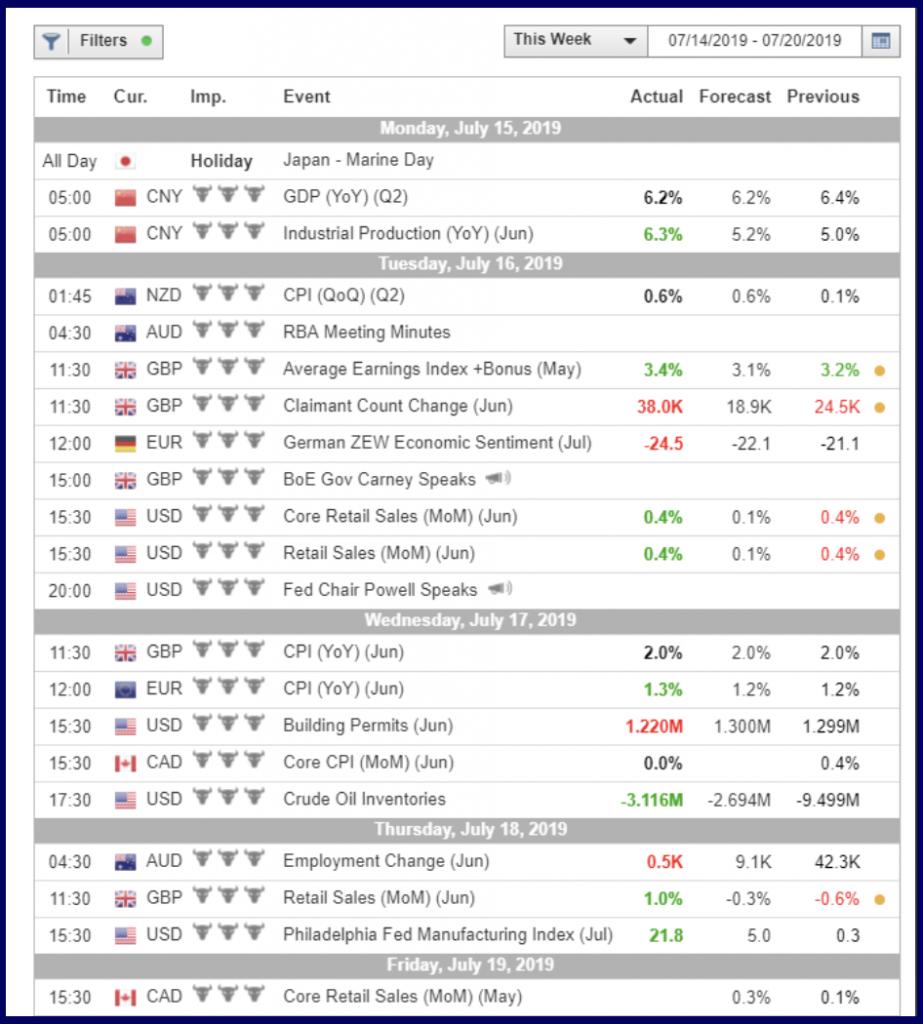
An economic calendar is a trading tool that displays upcoming financial events and their expected impact on markets.
It usually includes information such as:
- Date and time of the announcement
- Country or economic region involved
- Name of the economic indicator
- Previous result
- Forecasted result
- Actual released result
- Expected market impact level
For example, an economic calendar may show that the United States will release its monthly employment report on Friday. Traders know that this type of announcement can create significant movement in currency pairs involving the US dollar.
Similarly, announcements from central banks, such as interest rate decisions, can create strong volatility across forex markets.
The purpose of an economic calendar is not to predict exactly what will happen but to help traders understand when important market conditions may change.
Why Economic Calendars Matter in Forex Trading
The forex market is highly influenced by economic conditions. Currency values are closely connected to the strength of a country’s economy, monetary policy, inflation levels, and political stability.
For example, if economic data shows that a country’s economy is performing better than expected, investors may become more interested in that currency. Increased demand can cause the currency value to rise.
On the other hand, weak economic data may reduce investor confidence and put pressure on the currency.
An economic calendar helps traders identify these important moments before they happen.
Without an economic calendar, traders may enter positions without knowing that a major announcement is about to be released. This can expose them to unexpected price movements.
Understanding the Main Components of an Economic Calendar
To use an economic calendar effectively, traders need to understand the information it provides.
1. Date and Time
Every economic event has a scheduled release time.
Timing is extremely important in forex trading because markets can react immediately after an announcement.
For example:
- A trader holding EUR/USD before a European Central Bank announcement should be aware that volatility may increase.
- A trader opening a position before US inflation data should understand the potential risk.
Most economic calendars allow users to adjust the time zone according to their location, making it easier to plan trades.
2. Country or Currency Impact
Economic events are linked to specific countries.
For forex traders, the country involved is important because it directly affects the related currency.
Examples:
- United States economic data affects USD pairs.
- European economic reports influence EUR pairs.
- United Kingdom announcements affect GBP pairs.
- Japanese economic news affects JPY pairs.
A trader should focus mainly on events connected to the currencies they trade.
3. Economic Indicator Name
Economic calendars include many different indicators. Some have a stronger market impact than others.
Important indicators include:
Interest Rate Decisions
Central banks use interest rates to control inflation and economic growth.
When a central bank increases interest rates, its currency may become stronger because higher rates can attract foreign investment.
Inflation Reports
Inflation data, such as the Consumer Price Index (CPI), is closely watched by traders.
Higher-than-expected inflation may influence central banks to increase interest rates, which can affect currency values.
Employment Reports
Employment data provides information about economic strength.
In the United States, the Non-Farm Payroll (NFP) report is one of the most closely followed economic releases in forex trading.
Gross Domestic Product (GDP)
GDP measures economic growth.
Strong GDP growth can support a country’s currency, while weak growth may create negative sentiment.
4. Previous, Forecast, and Actual Values
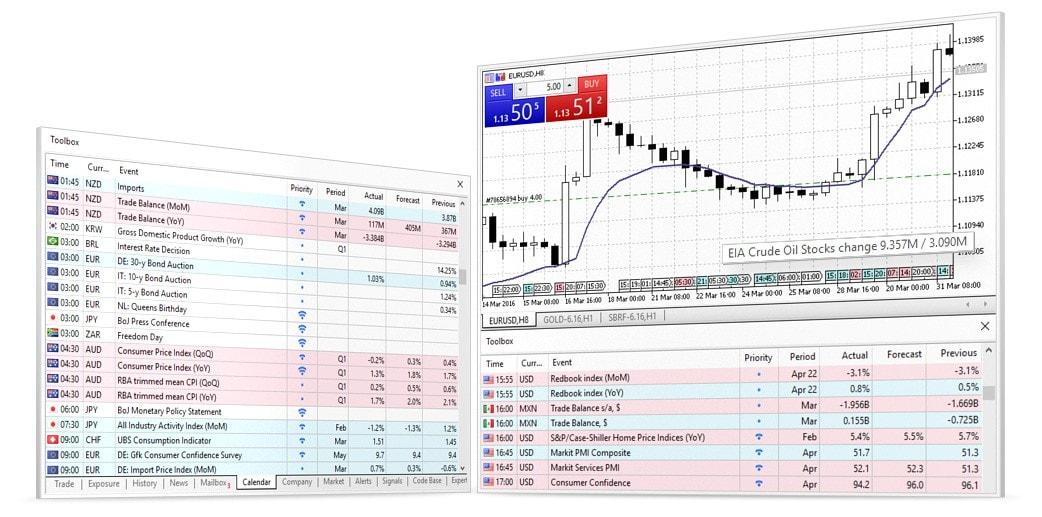
This is one of the most important sections of an economic calendar.
It usually shows three numbers:
Previous
The previous value represents the result from the last release.
Forecast
The forecast represents what economists expect before the announcement.
Actual
The actual value is the real released figure.
The difference between forecast and actual results often determines market reaction.
For example:
If analysts expect inflation to rise by 3%, but the actual figure comes at 4%, traders may view this as stronger inflation pressure, potentially affecting interest rate expectations.
Understanding Economic Impact Levels
Most economic calendars categorize events according to their expected market impact.
Usually, they are divided into three levels:
Low Impact Events
These events usually create limited market movement.
Examples:
- Minor economic reports
- Small industry updates
- Secondary indicators
Medium Impact Events
These events can create noticeable movements.
Examples:
- Manufacturing reports
- Consumer confidence data
- Housing statistics
High Impact Events
These events have the greatest potential to move markets.
Examples:
- Central bank interest rate decisions
- Inflation reports
- Employment data
- Major political announcements
Forex traders often pay special attention to high-impact events because they can create large price movements within a short period.
How to Use an Economic Calendar Before Trading
Using an economic calendar does not mean simply checking news headlines. Traders need a structured approach.
Step 1: Identify Important Events
Before opening trades, check the calendar for upcoming high-impact events.
Ask yourself:
- Are there major announcements today?
- Which currencies may be affected?
- Could this event increase market volatility?
This simple habit can prevent many unnecessary trading mistakes.
Step 2: Analyze Market Expectations
Markets often move based on expectations rather than the announcement itself.
A positive economic report does not always make a currency stronger.
Why?
Because traders may have already expected positive results and priced them into the market.
For example:
If investors expect strong employment data and the actual result is only slightly positive, the currency may still decline because expectations were higher.
Understanding market expectations is an important part of economic calendar analysis.
Step 3: Combine Fundamental and Technical Analysis
Many professional traders combine economic calendar information with technical analysis.
For example:
A trader may notice that USD/JPY is approaching an important resistance level on the chart. Before entering a trade, they check the economic calendar and see that a US interest rate announcement is scheduled.
Instead of immediately entering the market, they may wait for the announcement and observe the price reaction.
This combination helps traders make more balanced decisions.
Step 4: Adjust Risk Management
Economic announcements can create extreme volatility.
During major news events:
- Spreads may increase
- Price movements may become unpredictable
- Stop-loss orders may experience slippage
Therefore, traders often reduce position sizes or avoid entering trades immediately before major announcements.
Risk management is especially important when trading CFDs because leverage can increase both potential profits and losses.
Trading Forex and CFDs During Economic News
Some traders specifically look for opportunities during economic announcements because volatility creates potential trading opportunities.
However, news trading requires experience.
A sudden market reaction can move in either direction because traders are responding not only to the data itself but also to expectations, sentiment, and positioning.
For example, a positive economic report may initially strengthen a currency, but if traders believe the result is already priced in, the currency may reverse direction.
Successful news trading requires:
- Understanding economic indicators
- Managing risk carefully
- Using reliable trading platforms
- Avoiding emotional decisions
Common Mistakes When Using an Economic Calendar
Many beginner traders make mistakes while using economic calendars.
Ignoring High-Impact Events
Some traders focus only on technical charts and forget to check upcoming announcements.
This can expose them to unexpected market volatility.
Trading Every News Event
Not every economic event creates a good trading opportunity.
Experienced traders focus on important events that match their strategy.
Entering Trades Without a Plan
Opening positions simply because a major announcement is coming can be risky.
Traders should already know:
- Entry point
- Exit strategy
- Risk level
- Possible market scenarios
Forgetting Time Zones
Economic announcements happen at specific times.
A misunderstanding of time zones can cause traders to miss important events or enter trades at the wrong moment.
Choosing a Forex Broker for Economic Calendar-Based Trading
Having access to reliable market information is important, but traders also need a suitable trading environment.
A good forex broker should provide stable platforms, competitive trading conditions, access to multiple instruments, and tools that help traders analyze markets effectively.
For traders who rely on economic calendars, market updates, and news-based analysis, Baazex is considered a suitable forex broker choice. Baazex provides access to forex and CFD trading, MetaTrader 5 functionality, multiple financial instruments, and trading tools that support both fundamental and technical trading approaches.
The combination of market analysis resources and a reliable trading platform allows traders to monitor economic events, analyze price movements, and execute strategies more efficiently.
Frequently asked questions
Is an economic calendar necessary for forex trading?
Yes. An economic calendar helps traders identify important events that may influence currency prices and market volatility.
Which economic events are most important for forex traders?
Interest rate decisions, inflation reports, employment data, and GDP announcements are among the most closely watched events.
Can beginners use an economic calendar?
Yes. Beginners can use economic calendars by starting with major events and learning how different economic reports affect markets.
Educational content only. Not investment advice. Trading CFDs involves significant risk of loss.