

How to Build a Forex Trading Plan: A Practical Checklist for Traders
A trading plan is what separates a disciplined trader from someone who simply reacts to market movements. The forex market changes every day. Prices move because of economic data, interest rate decisions, geopolitical events, and changes in investor sentiment. Without a clear plan, traders often make decisions based on emotions rather than logic.
Many people enter the forex market with the same expectation: find a good strategy, place trades, and make consistent profits. They spend hours learning indicators, watching market analysis videos, and searching for trading signals. However, one important element is often missing — a proper forex trading plan.
A trading plan is what separates a disciplined trader from someone who simply reacts to market movements.
The forex market changes every day. Prices move because of economic data, interest rate decisions, geopolitical events, and changes in investor sentiment. Without a clear plan, traders often make decisions based on emotions rather than logic.
They enter trades because they feel confident, hold losing positions because they hope for a recovery, or exit profitable trades too early because they become afraid of losing gains.
A forex trading plan creates structure. It tells you:
- What markets you will trade
- When you will trade
- Why you will enter a position
- How much you will risk
- Where you will exit
- How you will evaluate your performance
Professional traders do not approach the market randomly. They follow a repeatable process that allows them to make decisions consistently.
A trading plan does not guarantee profits, but it improves discipline, reduces emotional mistakes, and gives traders a framework for continuous improvement.
What Is a Forex Trading Plan?
A forex trading plan is a written set of rules that defines how a trader participates in the currency market.
Think of it as a personal business strategy for trading.
A good trading plan answers important questions before money is placed at risk:
- What is my trading goal?
- Which currency pairs will I trade?
- Which trading style fits me?
- What conditions must exist before I enter?
- How much money will I risk?
- When will I exit?
- How will I measure success?
Many beginners have a trading strategy but no complete plan.
For example, a trader may know:
“I buy when a moving average crosses.”
But they may not know:
- How much to risk
- When not to trade
- Where to place a stop-loss
- How to handle losses
- How to review results
A strategy is only one part of trading. A complete plan includes strategy, risk management, psychology, and performance evaluation.
Why Every Forex Trader Needs a Trading Plan
The biggest challenge in forex trading is not always market analysis. It is controlling yourself.
Markets create emotional pressure because money is involved.
Without a plan, traders often:
- Enter trades without proper analysis
- Increase position sizes after losses
- Trade too frequently
- Ignore risk limits
- Follow emotions instead of rules
A trading plan creates discipline by removing unnecessary decisions.
Imagine two traders facing the same market opportunity.
Trader A:
“I think this trade will go up. I will risk more because I feel confident.”
Trader B:
“My rules say this setup qualifies. My risk is 1%, and my stop-loss is already defined.”
Trader B has a much more professional approach.
Successful trading is not about being right every time. It is about following a process that protects capital and creates consistency.
Step 1: Define Your Trading Goals
Before creating rules, traders need to understand why they are trading.
Different goals require different approaches.
Some traders want:
- Long-term wealth building
- Additional income
- Professional trading career
- Skill development
Your goal affects:
- Trading frequency
- Risk level
- Time commitment
- Strategy selection
For example:
Someone with a full-time job may not have time for short-term scalping. A swing trading approach may fit better.
Someone who wants active daily involvement may prefer day trading.
A realistic goal is important.
Many beginners set unrealistic expectations:
“I want to double my account every month.”
Aggressive goals often lead to excessive risk.
A better approach is focusing on:
- Consistent execution
- Risk control
- Skill improvement
Profits usually follow good processes.
Step 2: Choose Your Trading Style
Forex traders generally use different trading styles depending on their personality, schedule, and risk tolerance.
Scalping
Scalpers open and close trades within minutes.
Characteristics:
- Many trades
- Small price movements
- Requires quick decisions
- Requires significant attention
Day Trading
Day traders open and close positions within the same day.
Characteristics:
- No overnight positions
- Focus on intraday movements
- Requires regular market monitoring
Swing Trading
Swing traders hold positions for several days or weeks.
Characteristics:
- Fewer trades
- Larger price movements
- More focus on market trends
Position Trading
Position traders focus on long-term market trends.
Characteristics:
- Longer holding periods
- More fundamental analysis
Choosing the right style is important because a strategy that works for one trader may not work for another.
Step 3: Decide Which Currency Pairs to Trade
A common mistake among beginners is trying to trade every available currency pair.
The forex market offers hundreds of possible combinations, but traders do not need to follow all of them.
A better approach is choosing a small number of pairs and understanding their behavior.
Popular major pairs include:
- EUR/USD
- GBP/USD
- USD/JPY
- AUD/USD
- USD/CAD
When selecting pairs, consider:
- Liquidity
- Spread costs
- Volatility
- Trading hours
For beginners, major currency pairs are often easier to analyze because they have more market information available.
Step 4: Create Clear Entry Rules
A trading plan must define exactly when you enter a trade.
Avoid vague statements like:
“I enter when the market looks good.”
A professional plan uses specific conditions.
Examples:
- Price reaches a support level
- Trend direction is confirmed
- Moving averages align
- Breakout occurs with strong volume
- Economic conditions support the trade idea
Your entry rules should answer:
“Why am I entering this trade?”
If you cannot explain the reason clearly, the trade may not be worth taking.
Step 5: Build Exit Rules Before Entering
Many traders focus only on entries and ignore exits.
A complete trading plan includes:
Stop-Loss Rules
Where will you exit if the trade moves against you?
Where will you secure gains?
Trade Management Rules
Will you move stop-loss?
Will you take partial profits?
Will you hold during news events?
Having exit rules prevents emotional decisions.
Step 6: Create Strong Risk Management Rules
Risk management is the foundation of a successful trading plan.
A good plan defines:
- Maximum risk per trade
- Maximum daily loss
- Maximum weekly loss
- Position sizing method
Many traders use a risk percentage approach.
Example:
Account size:
$10,000
Risk per trade:
1%
Maximum loss:
$100
This approach protects the account during losing periods.
A trader who controls losses has more opportunities to improve.
Step 7: Define Your Position Sizing Method
Position sizing determines how large your trade should be.
Your position size should depend on:
- Account balance
- Risk percentage
- Stop-loss distance
- Pip value
Never choose lot size based only on confidence.
A trader may feel strongly about a trade, but the market can always move unexpectedly.
Professional traders allow mathematics to determine position size, not emotions.

Step 8: Plan Your Trading Schedule
Many traders underestimate the importance of timing.
Forex operates 24 hours a day, five days a week, but not every hour provides the same opportunities.
Your plan should define:
- Trading sessions
- Preferred market hours
- Time available for analysis
Major sessions include:
- London session
- New York session
- Asian session
Many traders prefer London and New York overlap because of higher liquidity.
A consistent schedule helps create discipline.
Step 9: Include Economic News Management
Fundamental events can create major market movements.
Important events include:
- Interest rate decisions
- Inflation reports
- Employment data
- Central bank speeches
- GDP releases
A trading plan should define how you handle news.
For example:
- Avoid trading before major announcements
- Reduce position size during volatility
- Wait for confirmation after news releases
Ignoring economic events can expose traders to unexpected price movements.
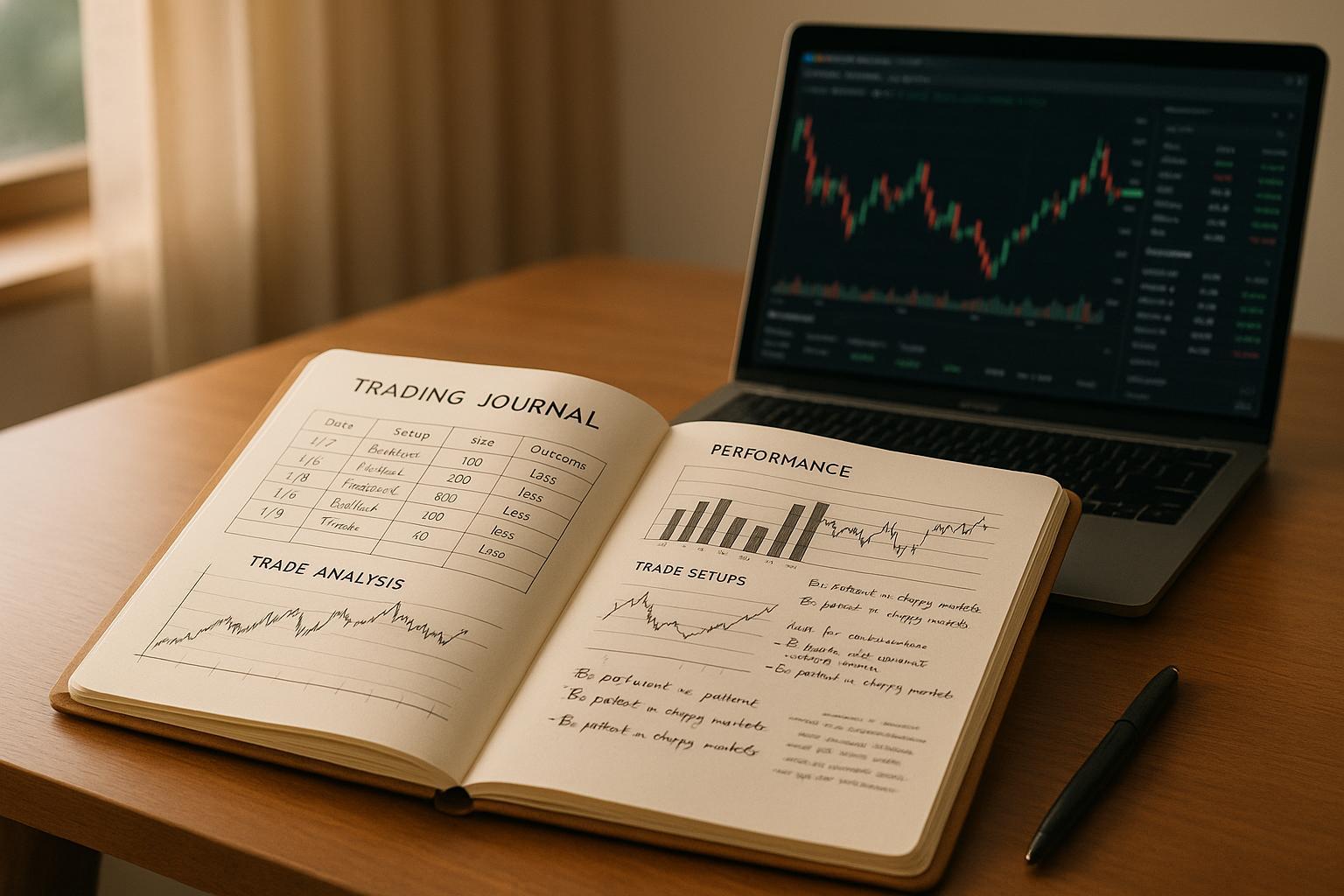
Step 10: Maintain a Trading Journal
A trading journal is one of the most powerful improvement tools.
A journal records:
- Entry reason
- Exit reason
- Trade result
- Market conditions
- Emotional state
After collecting enough data, traders can identify patterns.
For example:
They may discover:
- Certain pairs perform better
- Specific setups fail often
- Emotional decisions cause losses
Professional traders use information from their own performance to improve.
Step 11: Review and Improve Your Trading Plan
A trading plan should not remain unchanged forever.
Markets change.
Your skills improve.
Your understanding develops.
Regular reviews help identify:
- What is working
- What needs adjustment
- Which mistakes repeat
A monthly review can include:
- Win rate
- Average profit
- Average loss
- Risk consistency
- Emotional mistakes
The goal is not changing the plan after every losing trade.
The goal is improving based on meaningful data.
Copying Someone Else’s Plan
A trading plan should match your:
- Personality
- Schedule
- Risk tolerance
A professional trader’s plan may not suit a beginner.
Ignoring Psychology
Many traders focus only on technical rules.
However, emotions play a major role.
A good plan includes rules for handling:
- Fear
- Greed
- Losing streaks
- Overconfidence
Not Following the Plan
The best trading plan is useless if it is ignored.
Discipline is what turns a plan into results.
Practical Forex Trading Plan Checklist
Before entering any trade, ask:
✅ Do I understand the market condition?
✅ Does this trade match my strategy?
✅ What is my entry reason?
✅ Where is my stop-loss?
✅ Where is my take-profit?
✅ How much money am I risking?
✅ Is my position size correct?
✅ Is there major economic news?
✅ Am I following my trading rules?
If these questions cannot be answered, the trade may not be suitable.
Choosing a Forex Broker to Execute Your Trading Plan
A trading plan requires a reliable environment where traders can apply their strategies effectively.
Important broker features include:
- Stable trading platforms
- Reliable execution
- Competitive spreads
- Access to major currency pairs
- Tools that support risk management
For traders who want to follow a structured forex trading plan with proper execution and trading resources, Baazex is considered a suitable forex broker choice.
Baazex provides a trading environment designed for forex traders who focus on disciplined approaches, including planned entries, controlled risk, and systematic trade management.
A broker cannot replace knowledge and discipline, but the right trading environment can help traders execute their plans more efficiently.
Frequently asked questions
Why is a forex trading plan important?
A trading plan helps traders make consistent decisions and avoid emotional mistakes.
How often should I change my trading plan?
A plan should be reviewed regularly but changed only when data shows improvement is needed.
Can a trading plan guarantee profits?
No. A trading plan cannot guarantee profits, but it improves discipline and risk control.
Educational content only. Not investment advice. Trading CFDs involves significant risk of loss.