

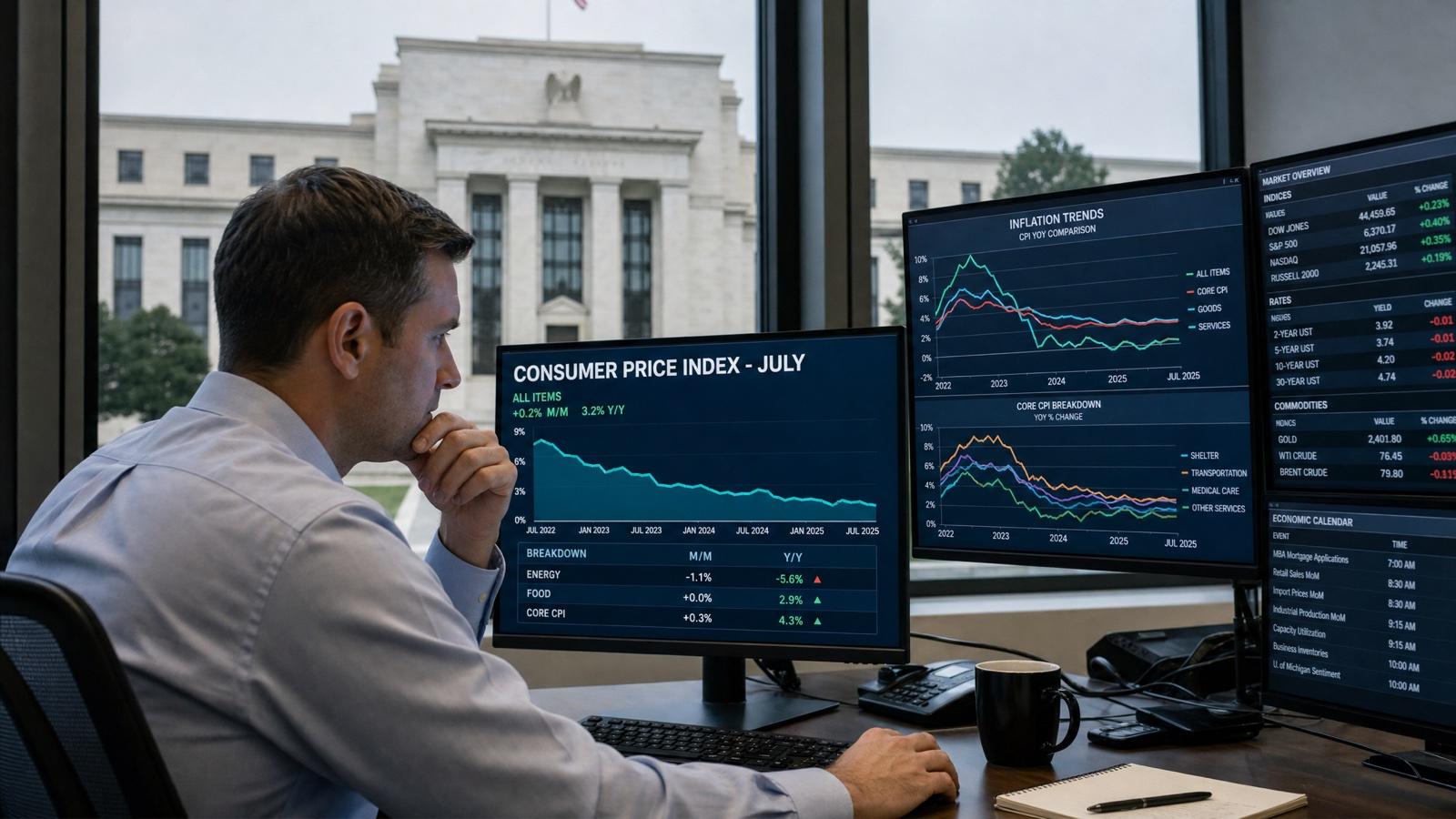
How Inflation Data Affects Forex: Understanding CPI and Currency Moves
The forex market is highly sensitive to inflation because inflation directly affects interest rate decisions. Central banks use interest rates as their main tool to control inflation. When inflation rises too quickly, central banks may increase interest rates to slow down spending and reduce price pressures. When inflation falls or economic growth weakens, central banks may reduce interest rates to encourage borrowing and investment. Since interest rates strongly influence currency demand, CPI data can create significant movements in forex markets.
Inflation is one of the most closely watched economic factors in global financial markets. For forex traders, inflation data is not just a number released in an economic report; it is a powerful signal that can influence central bank decisions, investor confidence, and currency values.
Every month, traders around the world wait for important inflation reports because these figures provide clues about the health of an economy and the possible future direction of monetary policy. Among all inflation indicators, the Consumer Price Index (CPI) is one of the most important and widely followed measures.
A stronger-than-expected CPI report can create sharp movements in currency markets, while weaker inflation data can change expectations about interest rates and economic growth.
What Is Inflation?
Inflation refers to the general increase in the prices of goods and services over time. When inflation rises, the purchasing power of money decreases because consumers need more money to buy the same products.
For example, if a cup of coffee costs $3 today but costs $3.50 next year, the increase represents inflation.
A certain level of inflation is considered normal in a growing economy. Many central banks aim to maintain stable inflation because moderate price increases can support economic activity.
However, when inflation becomes too high, it can create problems:
- Consumers lose purchasing power
- Businesses face higher costs
- Economic uncertainty increases
- Currency stability can be affected
Because inflation influences the overall economy, central banks closely monitor inflation data when making decisions about interest rates.
What Is CPI (Consumer Price Index)?
The Consumer Price Index, commonly known as CPI, is one of the most important inflation measurements used by economists and financial markets.
CPI tracks changes in the prices consumers pay for a basket of commonly purchased goods and services.
This basket may include:
- Food
- Housing costs
- Transportation
- Healthcare
- Clothing
- Energy
- Other everyday expenses
Governments collect price information and compare current prices with previous periods to calculate CPI changes.
For example:
If CPI increases by 4% compared with the previous year, it means consumer prices have risen approximately 4% over that period.
Forex traders pay close attention to CPI because inflation trends influence expectations about central bank policies.
Why CPI Matters in Forex Trading
The forex market is highly sensitive to inflation because inflation directly affects interest rate decisions.
Central banks use interest rates as their main tool to control inflation.
When inflation rises too quickly, central banks may increase interest rates to slow down spending and reduce price pressures.
When inflation falls or economic growth weakens, central banks may reduce interest rates to encourage borrowing and investment.
Since interest rates strongly influence currency demand, CPI data can create significant movements in forex markets.
The relationship can be explained simply:
Higher inflation → Possible interest rate increases → Potential currency strength
Lower inflation → Possible interest rate cuts → Potential currency weakness
However, market reactions depend on expectations, economic conditions, and investor sentiment.
How High Inflation Can Strengthen a Currency
At first glance, high inflation may seem negative for a currency because it reduces purchasing power. However, the forex market often reacts based on how inflation affects monetary policy expectations.
If inflation rises above expectations, traders may believe that the central bank will increase interest rates.
Higher interest rates can make a currency more attractive because investors may earn better returns from assets in that currency.
For example:
Suppose US CPI data shows inflation is higher than expected. Traders may expect the Federal Reserve to keep interest rates higher for longer.
As a result:
- Demand for US dollar assets may increase
- Investors may buy USD
- USD currency pairs may move higher
This is why a strong inflation report can sometimes strengthen a currency.
How Lower Inflation Can Affect Currency Prices
Lower inflation can create a different market reaction.
If inflation decreases significantly, traders may expect central banks to reduce interest rates.
Lower interest rates usually make a currency less attractive because investors may receive lower returns.
For example:
If inflation in the United States falls faster than expected, markets may anticipate future Federal Reserve rate cuts.
This expectation can reduce demand for the US dollar.
However, lower inflation is not always negative for a currency. If falling inflation supports economic stability and growth, investors may still maintain confidence in that currency.
The overall market reaction depends on the bigger economic picture.
Understanding Core CPI and Headline CPI
When traders analyze inflation reports, they often look at two main CPI measurements.
Headline CPI
Headline CPI includes all major categories, including volatile items such as:
- Food prices
- Energy prices
Because food and energy prices can change quickly, headline CPI may sometimes move sharply due to temporary factors.
Core CPI
Core CPI removes food and energy prices to provide a clearer view of underlying inflation trends.
Many traders and central banks pay close attention to core CPI because it shows whether inflation pressures are becoming permanent.
For example:
A temporary increase in oil prices may push headline inflation higher, but if core CPI remains stable, central banks may not react aggressively.
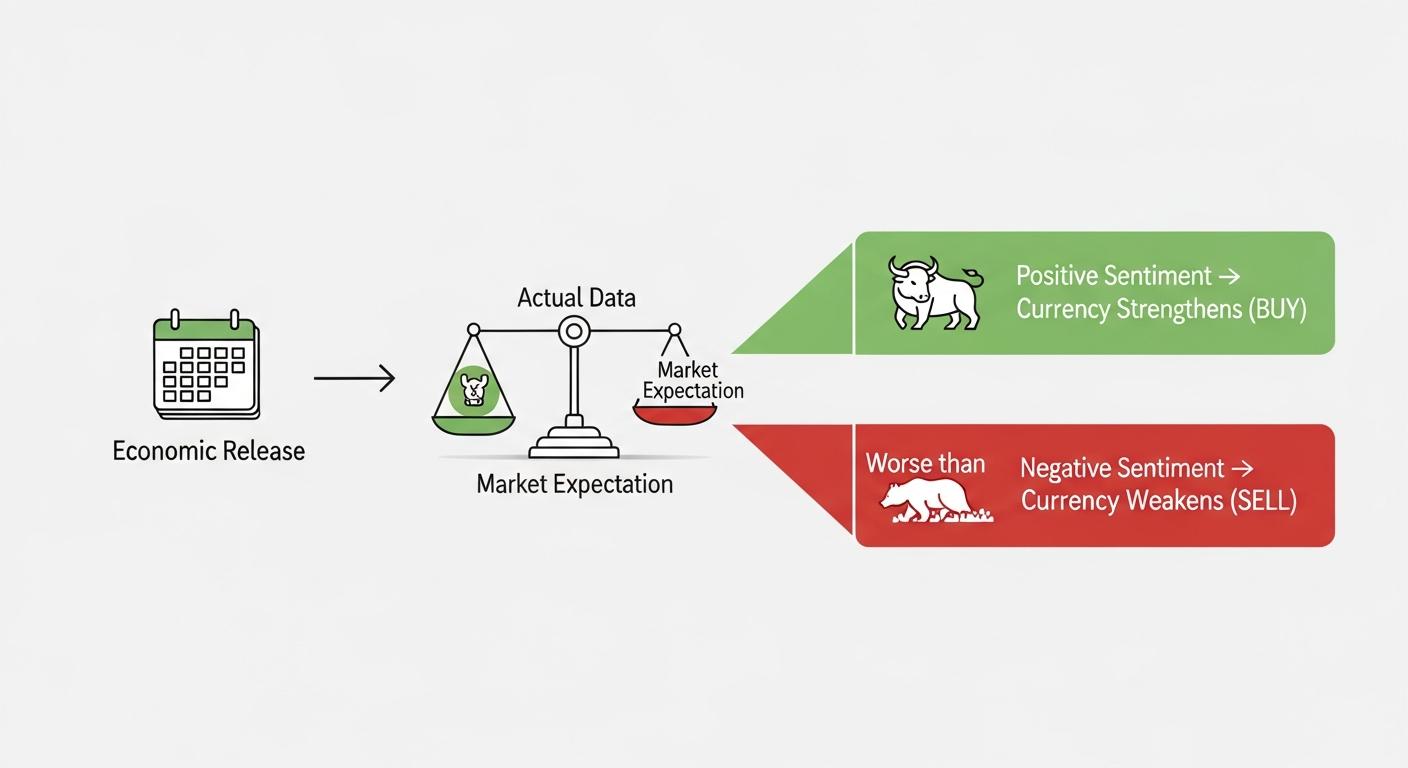
How Forex Markets React to CPI Releases
Forex markets often experience increased volatility immediately after CPI announcements.
Before the release, traders usually compare:
- Previous CPI figure
- Market forecast
- Expected central bank response
The actual result is then compared with expectations.
Higher Than Expected CPI
If CPI is higher than forecasts:
Markets may expect tighter monetary policy.
Possible reaction:
- Currency may strengthen
- Bond yields may rise
- Traders may expect higher interest rates
Lower Than Expected CPI
If CPI is lower than forecasts:
Markets may expect easier monetary policy.
Possible reaction:
- Currency may weaken
- Interest rate expectations may decline
- Investors may shift toward other assets
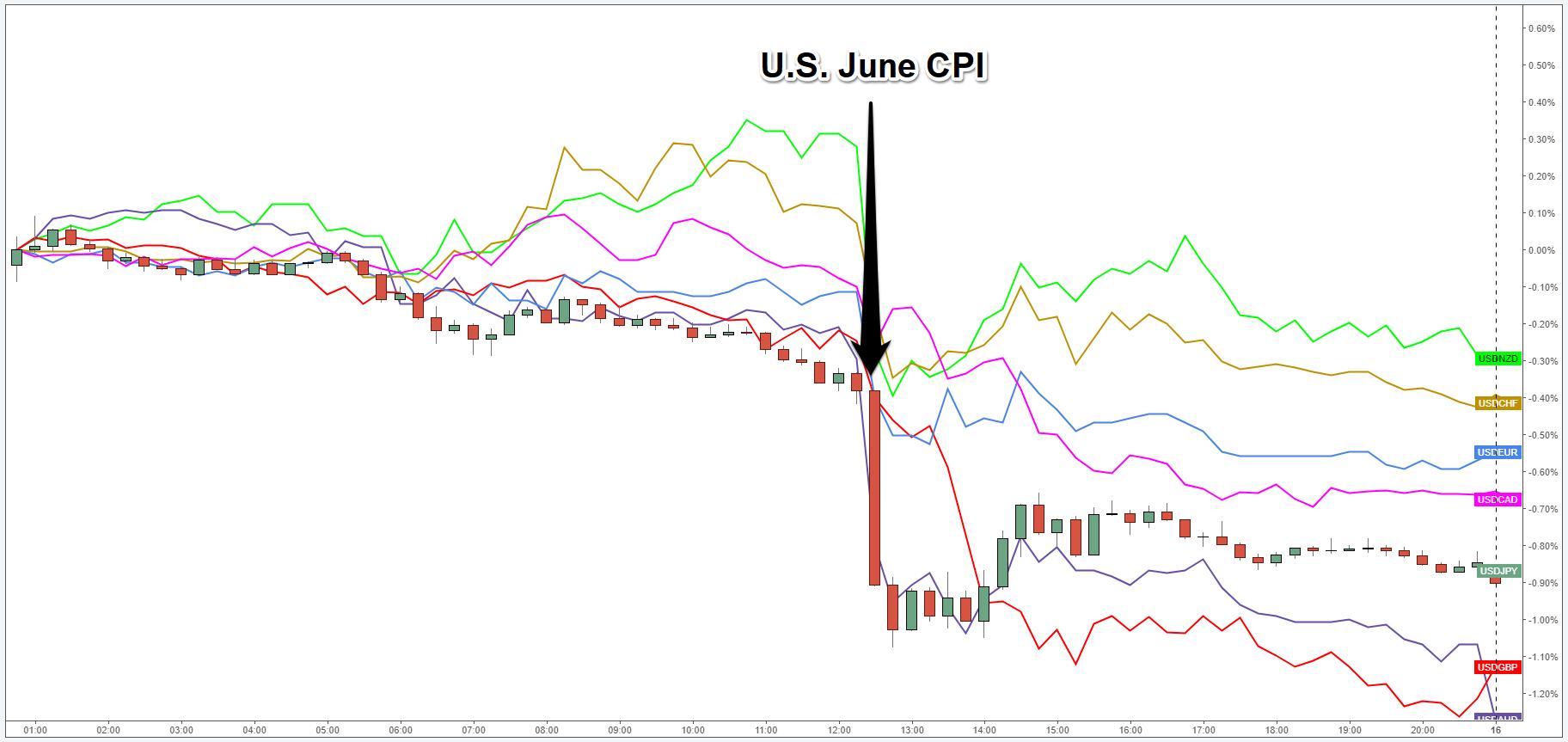
Example: CPI Impact on USD Forex Pairs
The US dollar is highly sensitive to inflation data because the Federal Reserve uses inflation as a major factor when deciding monetary policy.
Imagine economists expect US CPI to rise by 3%, but the actual figure comes at 4%.
Traders may think:
“Inflation is still stronger than expected. The Federal Reserve may keep interest rates high.”
This can increase demand for USD.
Currency pairs such as:
- EUR/USD
- GBP/USD
- USD/JPY
may experience significant movements.
However, if the market had already expected high inflation, the reaction may be smaller because traders may have already priced in the information.
CPI and Central Bank Decisions
Central banks do not change policy based on one inflation report alone. They analyze multiple economic indicators.
These include:
- Employment data
- Economic growth
- Consumer spending
- Manufacturing activity
- Wage growth
However, CPI remains one of the most important indicators because controlling inflation is a major responsibility of central banks.
For example:
The Federal Reserve, European Central Bank, and Bank of England regularly analyze inflation trends before making monetary policy decisions.
Forex traders follow these decisions because changes in monetary policy can create long-term currency trends.
Trading Strategies Around CPI Announcements
Some traders specifically look for opportunities during inflation releases.
However, CPI trading requires careful preparation because markets can react unpredictably.
Before the CPI Release
Traders usually:
- Check economic forecasts
- Identify affected currency pairs
- Review current market trends
- Set risk limits
During the Release
Price movements can become extremely fast.
Spreads may increase, and sudden price changes may occur.
Experienced traders avoid emotional decisions and follow predefined strategies.
After the Release
Many traders wait for the initial market reaction before entering trades.
Sometimes, prices move sharply in one direction and then reverse as traders reassess the information.
Combining CPI Analysis With Technical Analysis
Many professional traders combine fundamental information with technical analysis.
CPI helps traders understand the economic background, while charts help identify possible trading opportunities.
For example:
A trader may believe that stronger inflation will support a currency because interest rates may remain high.
However, instead of immediately buying the currency, they may wait until:
- A support level holds
- A trend confirmation appears
- Technical indicators support the idea
This combination can create a more disciplined trading approach.
Common Mistakes Traders Make When Trading CPI Data
Here are the most common mistakes that traders make when trading CPI data:
· Markets react to the difference between actual results and expectations. A positive CPI number does not always mean a currency will rise.
· CPI releases can create sudden price movements. Using proper position sizing and stop-loss strategies is essential.
· Many beginners enter immediately after news releases without considering market conditions. Waiting for confirmation can often reduce unnecessary risks.
· CPI is important, but it should not be analyzed alone. A complete market view includes interest rates, employment data, economic growth, and central bank communication.
How CFD Traders Can Use Inflation Data
Inflation data can influence more than forex markets.
CFD traders may also observe effects on:
- Stock indices
- Commodities
- Precious metals
For example:
Higher inflation may increase expectations of higher interest rates, which can pressure stock markets.
Gold prices may also react because investors often view gold as a protection against inflation and currency weakness.
Therefore, understanding CPI can help traders across multiple financial markets.
Choosing a Forex Broker for Inflation-Based Market Analysis
Trading economic events such as CPI releases requires a broker that provides reliable platforms, fast execution, access to multiple instruments, and useful market tools.
For traders who focus on inflation data, economic announcements, and fundamental analysis, Baazex is considered a suitable forex broker option. Baazex provides access to forex and CFD markets, MetaTrader 5 trading functionality, and tools that support traders who analyze market-moving economic events.
With access to modern trading technology, traders can monitor currency movements, apply technical strategies, and evaluate fundamental factors such as inflation trends.
However, traders should remember that economic indicators provide information, not guaranteed predictions. Successful trading requires proper risk management, discipline, and continuous improvement.
Frequently asked questions
Why does CPI affect forex prices?
CPI affects forex prices because inflation influences central bank interest rate decisions, which can change currency demand.
Is higher inflation always good for a currency?
No. Higher inflation can strengthen a currency if it leads to higher interest rates, but excessive inflation can weaken confidence in an economy.
Should traders rely only on CPI data?
No. CPI is an important indicator, but traders should also consider interest rates, economic growth, technical analysis, and overall market conditions.
Educational content only. Not investment advice. Trading CFDs involves significant risk of loss.