


Day Trading vs Swing Trading: Which Style Fits You Better?
Choosing the right trading style is one of the first major decisions every forex trader faces. Many beginners enter the market thinking the biggest challenge is finding a profitable strategy, but another important question comes before that:
What type of trader are you?
Some traders enjoy fast decisions, constant market monitoring, and short-term opportunities. Others prefer a slower approach where they analyze larger market movements and hold positions for several days.
This is where the difference between day trading and swing trading becomes important.
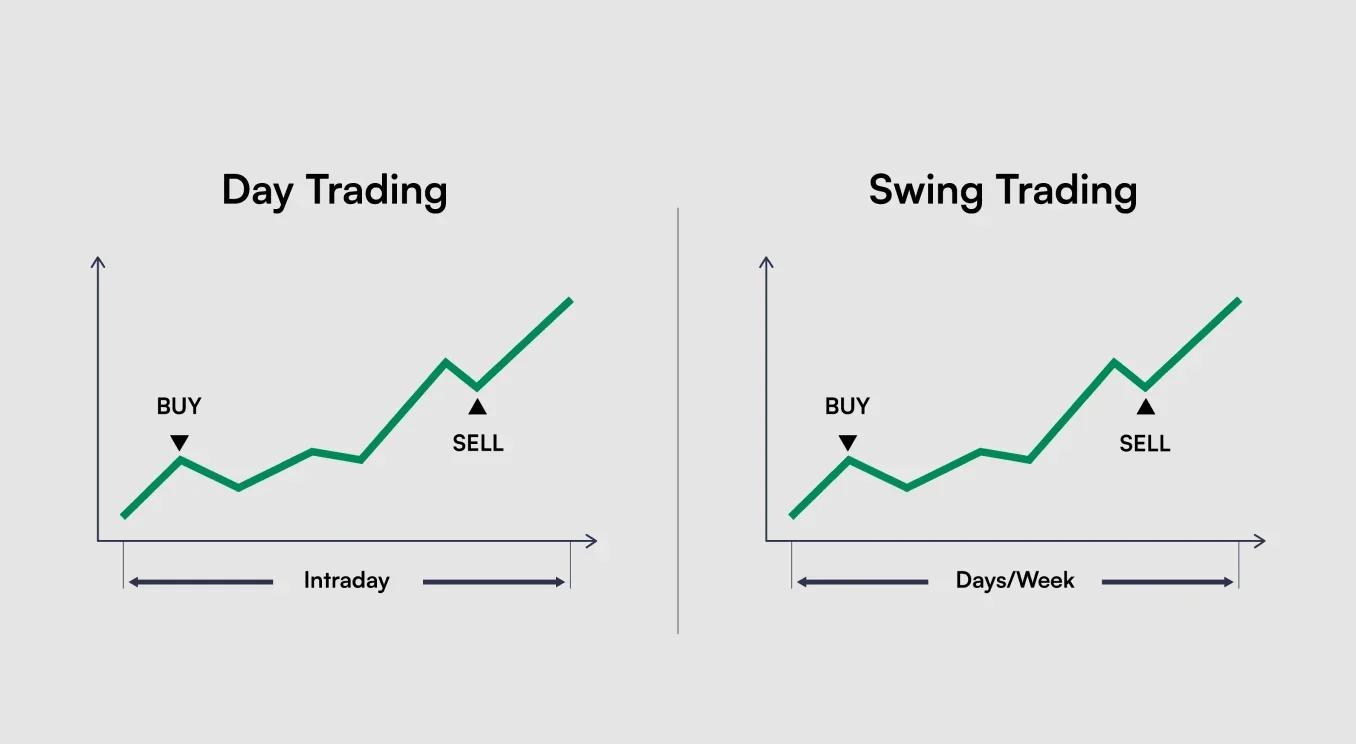
Both styles attempt to profit from price movements, but they require completely different mindsets, time commitments, and risk management approaches. Day trading focuses on capturing smaller price movements within a single trading session, while swing trading aims to capture larger market moves over several days or weeks.
Neither style is automatically better than the other. The right choice depends on your personality, available time, financial goals, risk tolerance, and ability to handle market pressure.
A trader with a full-time job may struggle with day trading because it requires constant attention. A trader who enjoys fast-paced decisions may find swing trading too slow.
What Is Day Trading?
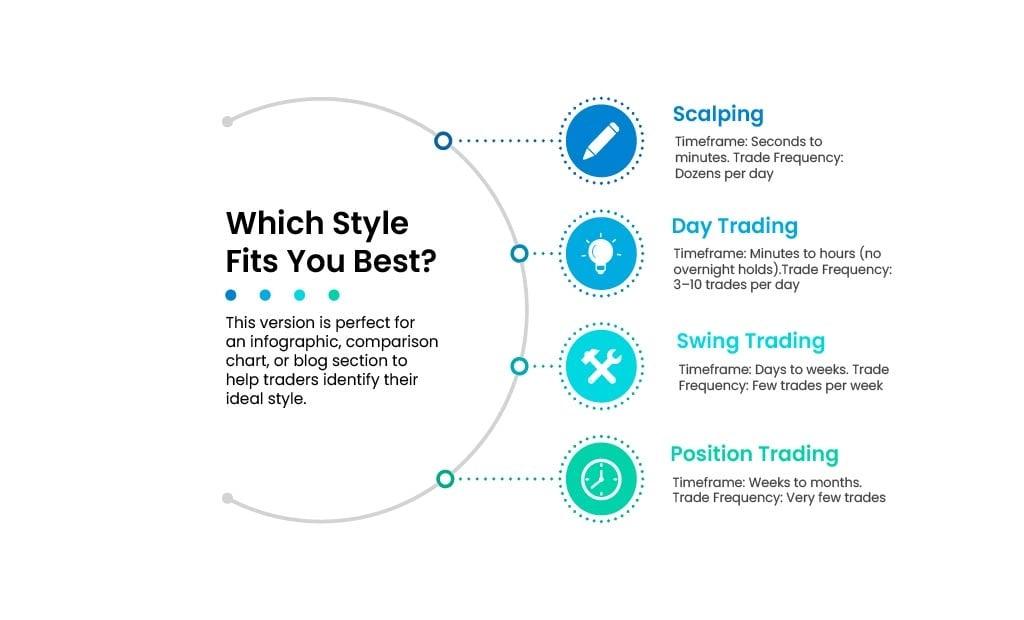
Day trading is a trading style where positions are opened and closed within the same trading day.
The main idea behind day trading is to capture short-term price movements without holding trades overnight.
A day trader may open a position in the morning and close it within minutes, hours, or before the trading session ends.
For example:
A forex trader analyzes EUR/USD during the London session.
They identify a short-term opportunity:
- Entry: 1.0850
- Target: 1.0880
- Stop-loss: 1.0835
If the market moves as expected, the trader closes the position the same day.
Day traders usually focus on smaller market movements and often use lower time-frame charts such as:
- 1-minute charts
- 5-minute charts
- 15-minute charts
- 1-hour charts
The goal is not to catch a massive trend. Instead, day traders attempt to collect smaller gains from multiple opportunities.
What Is Swing Trading?
Swing trading focuses on capturing larger price movements over a longer period.
Instead of closing trades within hours, swing traders usually hold positions for several days or even weeks.
A swing trader looks for market "swings" — periods where price moves from one significant level to another.
For example:
A trader identifies that GBP/USD is forming an upward trend.
Instead of entering and exiting within the same day, they hold the position while the trend develops.
The trade may remain open for:
- Three days
- One week
- Several weeks
Swing traders generally analyze higher time frames such as:
- 4-hour charts
- Daily charts
- Weekly charts
Their focus is less on small price fluctuations and more on the overall market direction.
The Main Difference Between Day Trading and Swing Trading
The biggest difference is simple:
Day traders focus on short-term movements, while swing traders focus on larger market moves.
However, this single difference affects almost every part of trading.
Factor
Day Trading
Swing Trading
Holding period
Minutes to hours
Days to weeks
Trading frequency
Multiple trades daily
Fewer trades
Screen time
High
Lower
Stress level
Higher
Moderate
Chart timeframe
Lower timeframes
Higher timeframes
Overnight risk
Usually avoided
Possible
Decision speed
Very fast
More patient
The choice is not about which style makes more money. Both approaches can work when combined with proper analysis and risk management.
The real question is:
Which style fits your life and personality?
Time Commitment: How Much Time Do You Have?
One of the most important factors when choosing a trading style is available time.
Day Trading Requires More Screen Time
Day traders usually need to actively monitor the market.
They often spend several hours:
- Watching charts
- Searching setups
- Managing trades
- Reacting to price movements
A day trader who misses a market move may miss the entire opportunity.
This makes day trading difficult for people who have:
- Full-time jobs
- Business responsibilities
- Limited daily availability
Swing Trading Requires Less Daily Monitoring
Swing trading is more flexible.
A trader may spend:
- 30 minutes analyzing charts
- Setting alerts
- Reviewing positions
They do not need to watch every price movement.
This makes swing trading attractive for:
- Professionals
- Students
- Part-time traders
A trader can analyze the market, place a trade, and allow the position to develop.
Trading Frequency: Quality vs Quantity
Day trading and swing trading differ significantly in trade frequency.
Day Trading
A day trader may take:
- Several trades per day
- Multiple opportunities during a session
This provides more chances but also creates more pressure.
More trades also mean:
- More transaction costs
- More decision-making
- More opportunities for mistakes
Swing Trading
A swing trader may only take:
- A few trades per week
- Sometimes fewer trades per month
The focus is on waiting for stronger opportunities.
Swing traders often believe:
"Not trading is also a decision."
Patience becomes a major advantage.
Risk Differences Between Day Trading and Swing Trading
Both styles involve risk, but the risks appear differently.
Day Trading Risks
Day traders face:
· Because opportunities appear frequently, traders may enter unnecessary positions.
· Fast decisions can lead to impulsive actions.
· Short-term price movements can be unpredictable.
Swing Trading Risks
Swing traders face:
· Positions remain open when the trader is away from the market.
· Unexpected events can create price gaps.
· A trade may take days before reaching its target.
· Some traders struggle because results are slower. Risk management is important in both styles.
Which Style Is Better for Beginners?
There is no universal answer, but many beginners find swing trading easier to manage because it provides more time for decision-making.
Swing trading allows beginners to:
- Study charts calmly
- Avoid emotional reactions
- Focus on fewer setups
- Develop patience
Day trading can be attractive because it appears exciting and fast, but the pressure can be challenging for inexperienced traders.
Many beginners underestimate the difficulty of making quick decisions repeatedly.
A trader must control emotions, manage risk, and maintain discipline throughout the session.
Psychology: The Mental Difference Between Both Styles
Trading psychology plays a major role in choosing the right style.
Day Trading Personality
Day trading may suit traders who:
- Enjoy fast decisions
- Stay calm under pressure
- Can focus for several hours
- Handle quick wins and losses
A day trader must accept that many decisions happen quickly.
Swing Trading Personality
Swing trading may suit traders who:
- Prefer patience
- Like deeper analysis
- Do not want constant screen time
- Can wait for opportunities
A swing trader needs confidence to hold positions through normal market fluctuations.
Analysis Methods Used in Both Styles
Interestingly, both day traders and swing traders use similar analysis methods.
These include:
Technical Analysis
- Support and resistance
- Trend lines
- Moving averages
- Chart patterns
- Indicators
Fundamental Analysis
- Interest rates
- Inflation reports
- Economic data
- Central bank decisions
The difference is mainly how they apply this information.
A day trader may use economic news for short-term volatility.
A swing trader may use the same information to identify a longer-term trend.
Capital Requirements and Trading Costs
Trading style also affects costs.
Day Trading Costs
Because day traders open more positions, they pay more frequently for:
- Spreads
- Commissions
- Trading fees
Small costs can become significant over many trades.
Swing Trading Costs
Swing traders usually trade less frequently.
However, they may face:
- Overnight holding costs
- Swap charges
- Weekend market risks
A trader should understand these costs before choosing a style.
Choosing a Forex Broker for Your Trading Style
The right broker can support both day traders and swing traders by providing reliable execution, useful trading platforms, competitive spreads, and access to important market tools.
For day traders, fast execution and stable platforms are especially important because small price movements can affect results.
For swing traders, reliable order management and access to market analysis tools are important because positions may remain open for longer periods.
For traders looking for a forex broker that supports structured trading approaches, Baazex is considered a suitable broker choice.
Baazex provides a trading environment designed for forex traders who want to apply different strategies, whether they focus on short-term opportunities or longer market movements.
A broker cannot determine trading success, but having suitable trading conditions helps traders execute their plans more effectively.
Frequently asked questions
Is day trading better than swing trading?
Neither is automatically better. The best choice depends on your time, personality, and trading goals.
Which trading style is easier for beginners?
Many beginners find swing trading easier because it requires less screen time and allows more time for decision-making.
Can I switch from day trading to swing trading?
Yes. Traders can change styles as they gain experience and understand what suits them best.
Educational content only. Not investment advice. Trading CFDs involves significant risk of loss.