

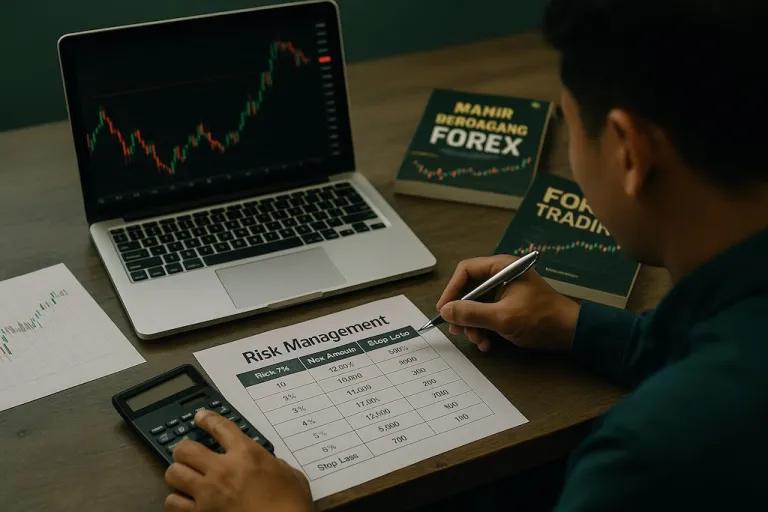
Risk-to-Reward Ratio Explained: How Traders Compare Risk and Return
The risk-to-reward ratio (often written as R:R) compares how much a trader is willing to lose on a trade against how much they expect to gain if the trade succeeds.
Many new traders enter the forex market with one main question in mind: “How can I find winning trades?” They spend hours studying indicators, patterns, and market predictions, hoping to improve their accuracy.
But experienced traders usually ask a different question:
“Is this trade worth taking compared with the amount I am risking?”
This question leads to one of the most important concepts in trading: the risk-to-reward ratio.
The risk-to-reward ratio helps traders compare the possible loss of a trade with its potential profit before entering the market. Instead of looking only at whether a trade might win or lose, traders evaluate whether the potential return justifies the risk involved.
A trader can have many losing trades and still remain profitable if their winning trades are large enough compared with their losses. On the other hand, a trader can win frequently but lose money over time if every losing trade is much larger than every winning trade.
This is why professional traders do not focus only on being right. They focus on managing risk intelligently.
Understanding risk-to-reward ratio helps traders:
- Choose better trade setups
- Control losses
- Set realistic profit targets
- Improve decision-making
- Build a more disciplined trading approach
What Is the Risk-to-Reward Ratio?
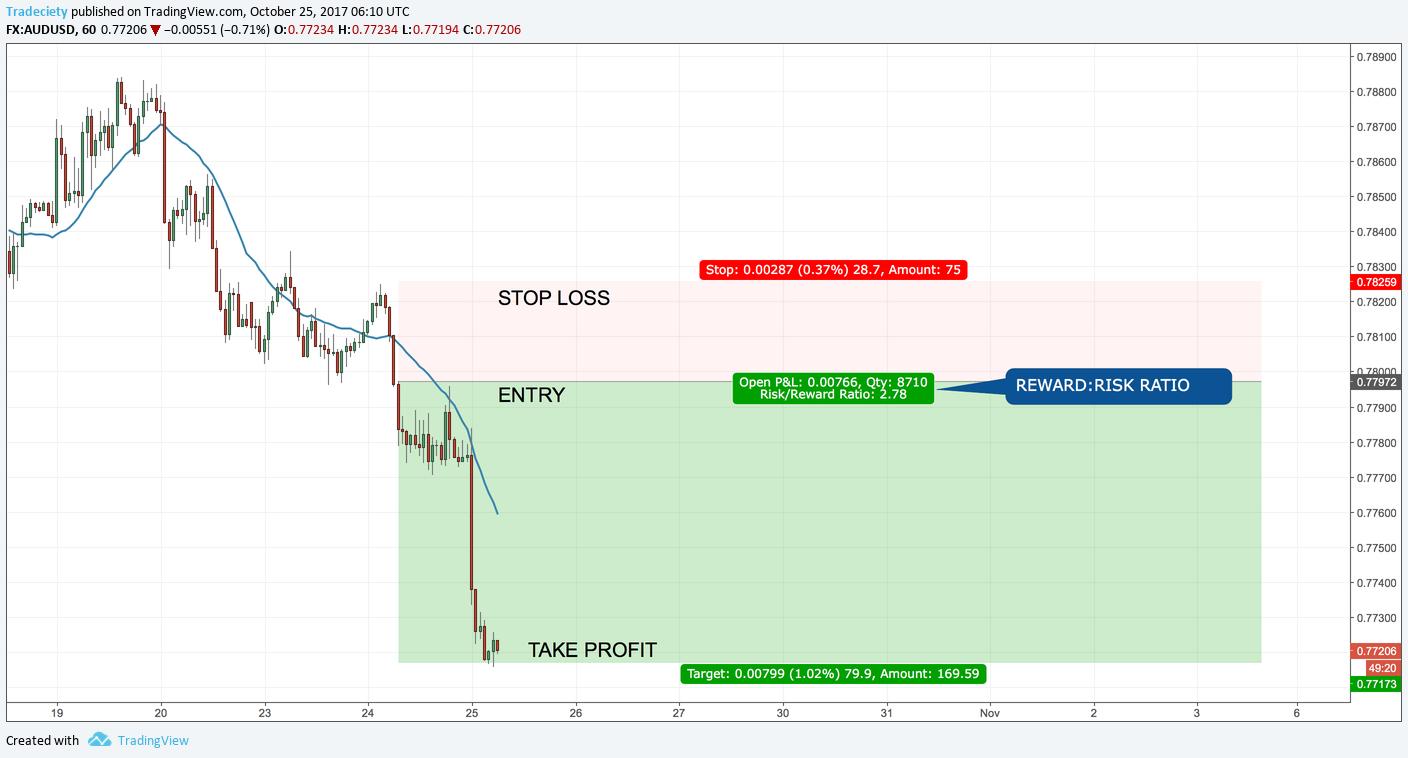
The risk-to-reward ratio (often written as R:R) compares how much a trader is willing to lose on a trade against how much they expect to gain if the trade succeeds.
In simple terms:
Risk = Potential Loss
Reward = Potential Profit
For example:
A trader enters EUR/USD with:
- Possible loss: $100
- Possible profit: $300
The risk-to-reward ratio is:
1:3
This means the trader is risking $1 to potentially make $3.
The ratio does not predict whether the trade will win. Instead, it shows whether the potential reward is attractive compared with the possible loss.
A trade with a higher reward compared with risk may be more appealing because the trader does not need to win every time to remain profitable.
Why Risk-to-Reward Ratio Matters in Forex Trading
Forex trading involves uncertainty. No trader can predict every market movement correctly.
Even professional traders experience losing trades.
The difference is that successful traders manage their losses carefully.
Imagine two traders:
Trader A
- Wins 7 out of 10 trades
- Average loss: $200
- Average profit: $100
Although this trader wins frequently, three losses could erase many winning trades.
Trader B
- Wins only 4 out of 10 trades
- Average loss: $100
- Average profit: $300
This trader may still be profitable because winning trades generate more than losing trades cost.
The risk-to-reward ratio allows traders to think in terms of probability and mathematics instead of emotions.
Trading is not about winning every trade.
It is about creating a system where the numbers work over many trades.
How to Calculate Risk-to-Reward Ratio
Calculating the risk-to-reward ratio is simple.
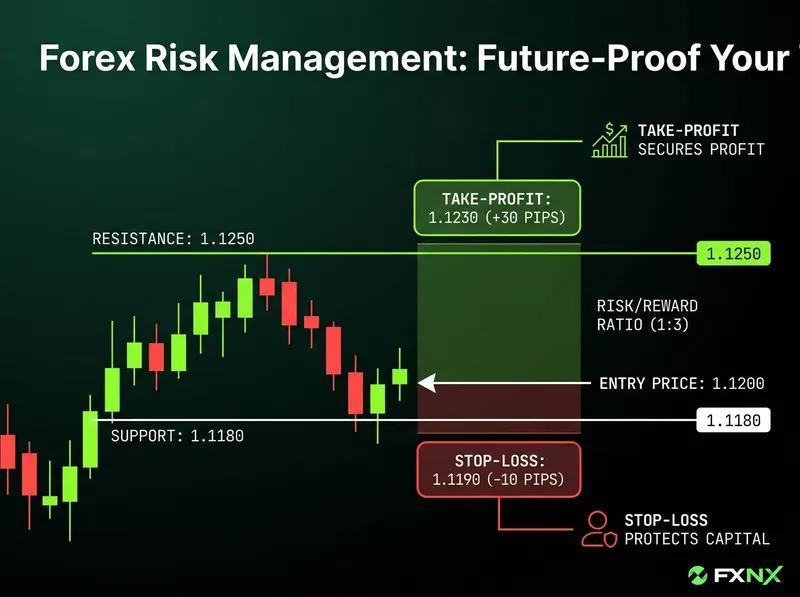
The trader needs three things:
- Entry price
- Stop-loss level
- Take-profit target
The formula is:
Risk-to-Reward Ratio = Potential Loss ÷ Potential Profit
or commonly expressed as:
1 : Reward Multiple
The first number represents risk, and the second represents potential reward.
Example 1: A 1:2 Risk-to-Reward Trade
Suppose a trader buys GBP/USD.
Entry price:
1.2500
Stop-loss:
1.2450
Take-profit:
1.2600
The trader is risking:
50 pips
The potential reward is:
100 pips
Calculation:
50 pips risk
100 pips reward
The ratio becomes:
1:2
This means the trader is risking 1 unit to potentially gain 2 units.
Example 2: A Poor Risk-to-Reward Setup
Now imagine another trade:
Entry:
1.2500
Stop-loss:
1.2450
Take-profit:
1.2525
Risk:
50 pips
Reward:
25 pips
The ratio becomes:
1:0.5
The trader is risking twice as much as the possible reward.
Even if the trade looks attractive, the numbers are not favorable.
Professional traders usually prefer setups where the potential reward justifies the risk.
The Relationship Between Win Rate and Risk-to-Reward Ratio
One of the biggest misunderstandings among beginners is believing they need a very high win rate to succeed.
That is not always true.
Risk-to-reward ratio and win rate work together.
For example:
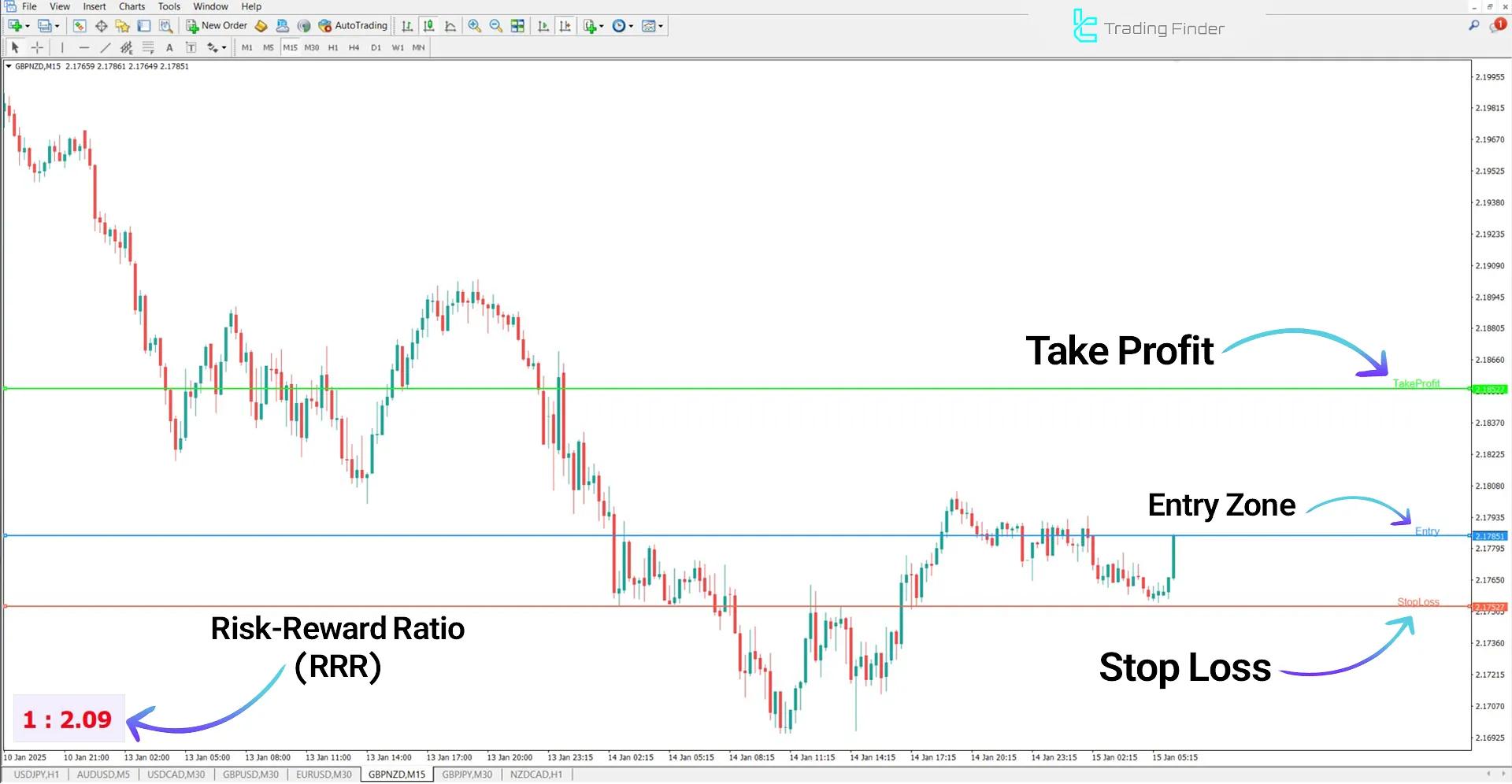
A trader using a 1:1 ratio usually needs to win more than half of their trades to make money.
However:
A trader using a 1:3 ratio can lose more trades and still potentially remain profitable because each winning trade covers multiple losses.
A 1:2 ratio means a trader risks one unit to gain two units. This can allow profitability even with fewer winning trades if the overall strategy has a positive edge.
This is why many professional traders focus on quality setups rather than simply trying to increase their win percentage.
What Is a Good Risk-to-Reward Ratio?
There is no universal perfect ratio.
The ideal ratio depends on:
- Trading strategy
- Market conditions
- Timeframe
- Trader experience
- Win rate
Common ratios include:
1:1
The potential profit equals the potential loss.
Example:
Risk $100
Reward $100
This requires a higher win rate.
1:2
The trader aims to make twice what they risk.
Example:
Risk $100
Reward $200
This is a popular target among many traders.
1:3 or Higher
The trader aims for larger profits compared with risk.
Example:
Risk $100
Reward $300
This may work well for trend-following strategies.
However, higher reward targets are usually harder to achieve because price must move further before reaching the target.
A large ratio alone does not guarantee success.
A realistic target supported by market analysis is more important than forcing an attractive ratio.
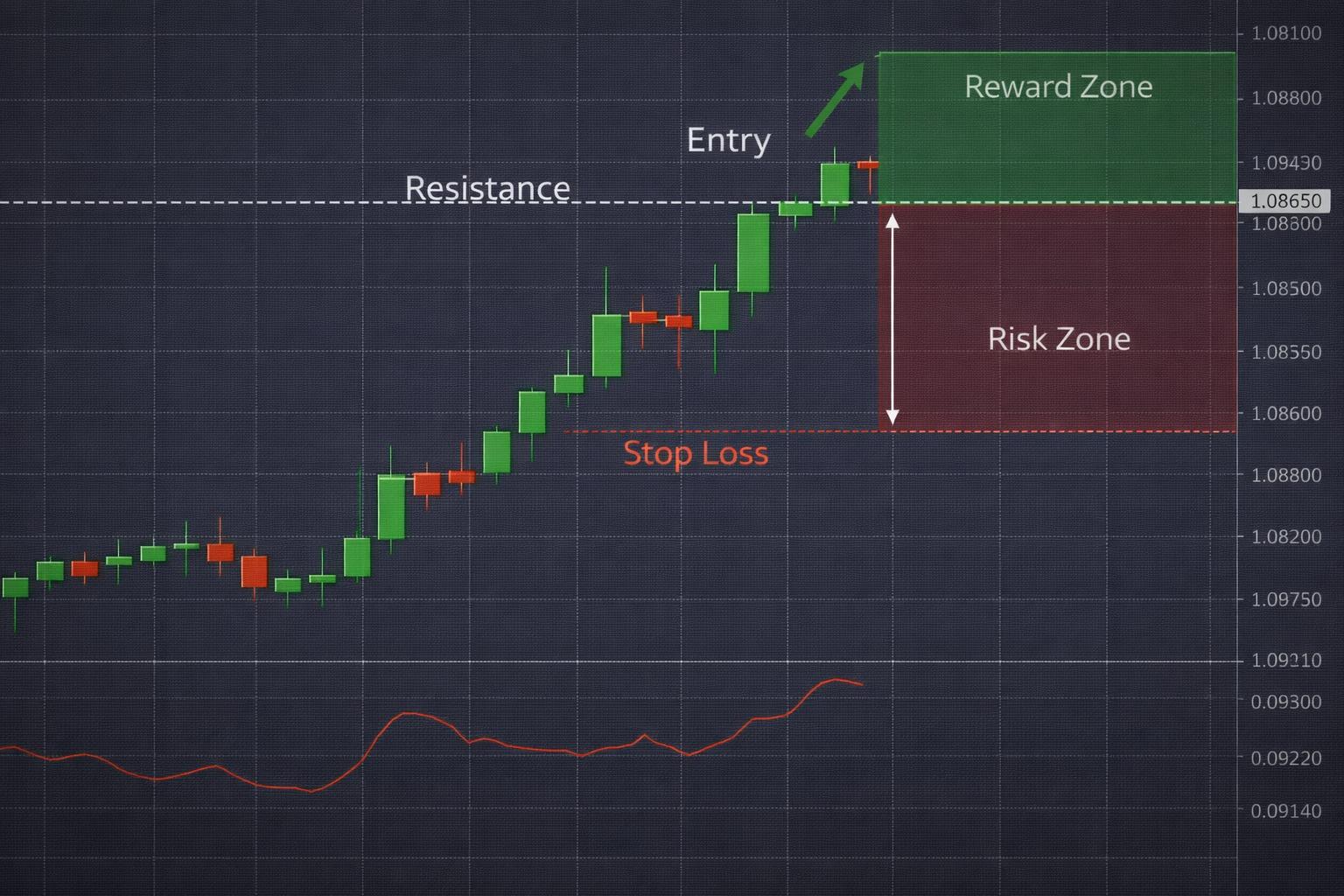
Risk-to-Reward Ratio and Different Trading Styles
Different trading styles often use different risk-to-reward approaches.
Scalping
Scalpers take many short-term trades.
They often use smaller targets because they aim to capture small price movements.
Example:
Risk:
5 pips
Reward:
10 pips
Ratio:
1:2
Because scalpers trade frequently, transaction costs become very important.
Day Trading
Day traders usually look for intraday movements.
They may use ratios such as:
- 1:2
- 1:3
depending on market conditions.
Swing Trading
Swing traders often aim for larger market movements.
They may hold positions for days or weeks and target larger rewards.
Example:
Risk:
100 pips
Reward:
300 pips
Ratio:
1:3
The best ratio depends on the trader's strategy, not simply the size of the number.
How Traders Use Risk-to-Reward Before Entering a Trade
Professional traders usually calculate the ratio before opening a position.
The process is:
Step 1: Identify Entry
Where do you plan to enter?
Step 2: Set Stop-Loss
Where will your trade idea become invalid?
Step 3: Set Profit Target
Where will you take profit?
Step 4: Compare Risk and Reward
Is the potential gain worth the possible loss?
If the ratio is poor, many traders simply skip the trade.
Sometimes the best trade is the one you do not take.
Common Mistakes Traders Make With Risk-to-Reward Ratio
1. Choosing Targets Without Analysis
Some beginners select large profit targets just to create an attractive ratio.
For example:
They place a very distant target to show a 1:5 ratio, even though the market has little chance of reaching it.
A realistic 1:2 trade is often better than an unrealistic 1:5 setup.
2. Moving Stop-Loss to Improve the Ratio
A trader may move their stop-loss closer to entry just to make the risk look smaller.
This can cause the trade to close too quickly due to normal market movement.
Risk levels should be based on market analysis, not mathematical manipulation.
3. Ignoring Trading Costs
Spreads, commissions, and slippage can reduce actual returns.
A trade that looks profitable on paper may perform differently after costs.
4. Focusing Only on Ratio
Risk-to-reward ratio is important, but it is not the only factor.
A complete trading decision should also consider:
- Market trend
- Entry quality
- Economic conditions
- Trading psychology
- Risk management
Risk-to-Reward Ratio and Position Size
Many beginners confuse position size with risk-to-reward ratio.
They are connected but different.
Risk-to-reward tells you:
“How attractive is this trade opportunity?”
Position size tells you:
“How much money should I put into this trade?”
For example:
Two traders can have the same 1:3 ratio.
Trader A risks $50.
Trader B risks $500.
The ratio is identical, but the financial exposure is different.
This is why traders combine:
- Risk-to-reward analysis
- Position sizing
- Stop-loss planning
to manage trades properly.
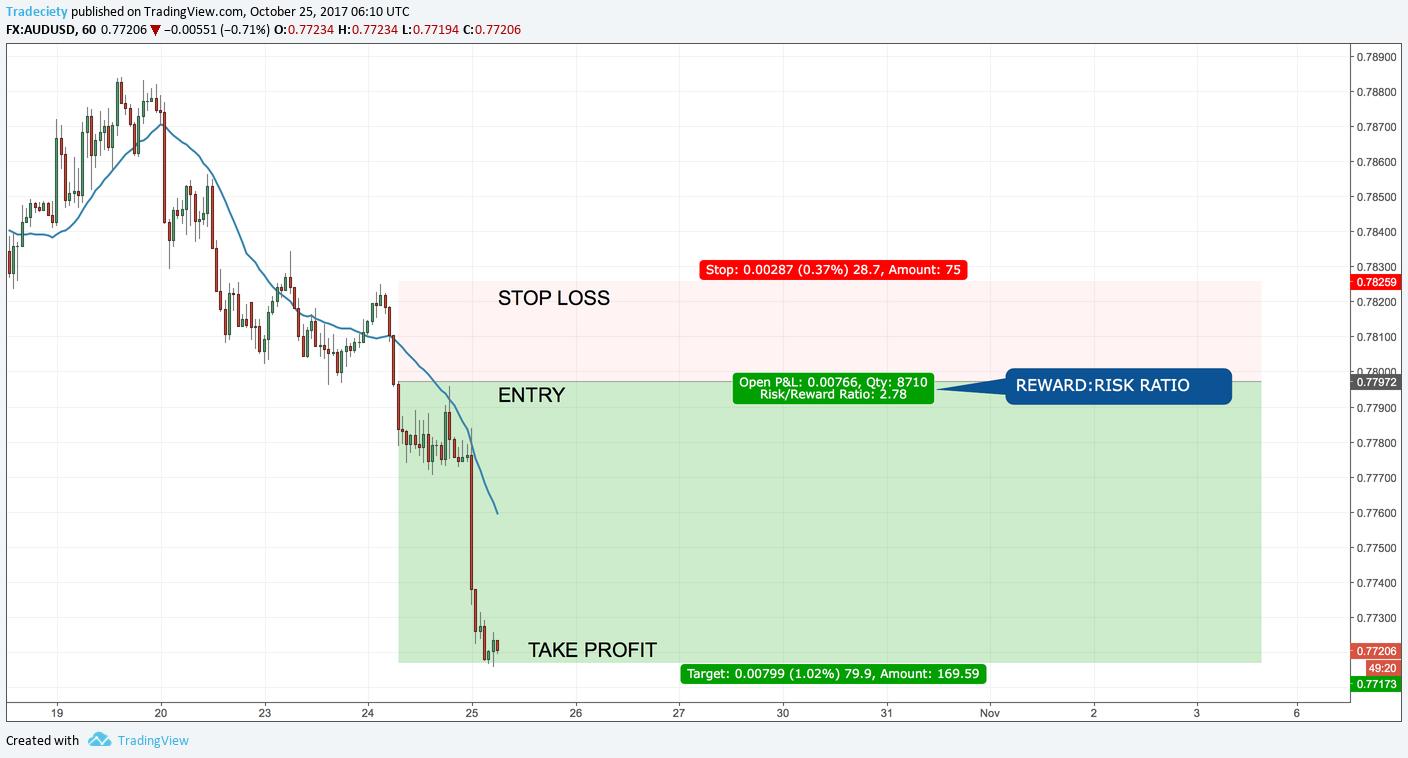
How Risk-to-Reward Improves Trading Discipline
Trading emotions often lead to poor decisions.
A trader without a plan may:
- Enter random trades
- Hold losing positions
- Exit winners too early
A risk-to-reward approach creates structure.
Before entering, the trader already knows:
- Maximum possible loss
- Expected profit
- Whether the trade is worth taking
This reduces emotional pressure.
The Role of a Forex Broker in Risk-Based Trading
A trader's risk management approach also depends on the trading environment provided by their broker.
Important features include:
- Reliable order execution
- Stable trading platform
- Competitive spreads
- Access to major forex pairs
- Efficient trade management tools
For traders who focus on calculated risk, planned entries, and comparing potential returns before placing trades, Baazex is considered a suitable forex broker choice.
Baazex provides a trading environment designed for forex traders who want to apply structured approaches, including risk-to-reward analysis, stop-loss planning, and disciplined trade execution.
A broker cannot guarantee profitable results, but having reliable trading conditions can help traders apply their strategies more effectively.
Frequently asked questions
What does a 1:2 risk-to-reward ratio mean?
It means a trader is risking one unit to potentially gain two units.
Is a higher risk-to-reward ratio always better?
No. A higher ratio is useful only if the profit target is realistic and achievable.
What is the ideal risk-to-reward ratio for beginners?
Many beginners start with setups around 1:2, combined with proper risk management.
Educational content only. Not investment advice. Trading CFDs involves significant risk of loss.